Dedicated to novelist Octavia E. Butler, who anticipated our likely future, and the scientists who work towards procuring a better one.
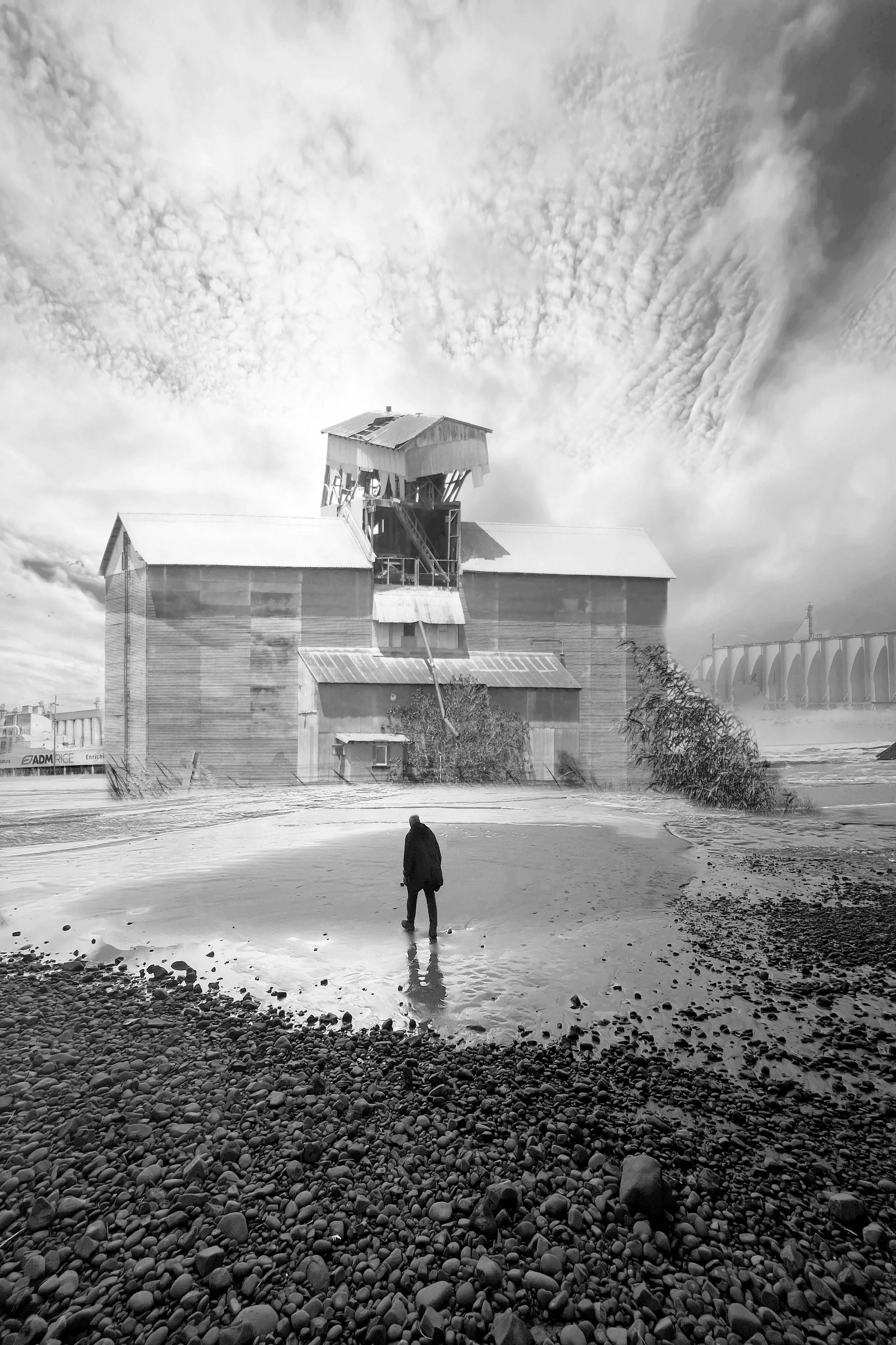
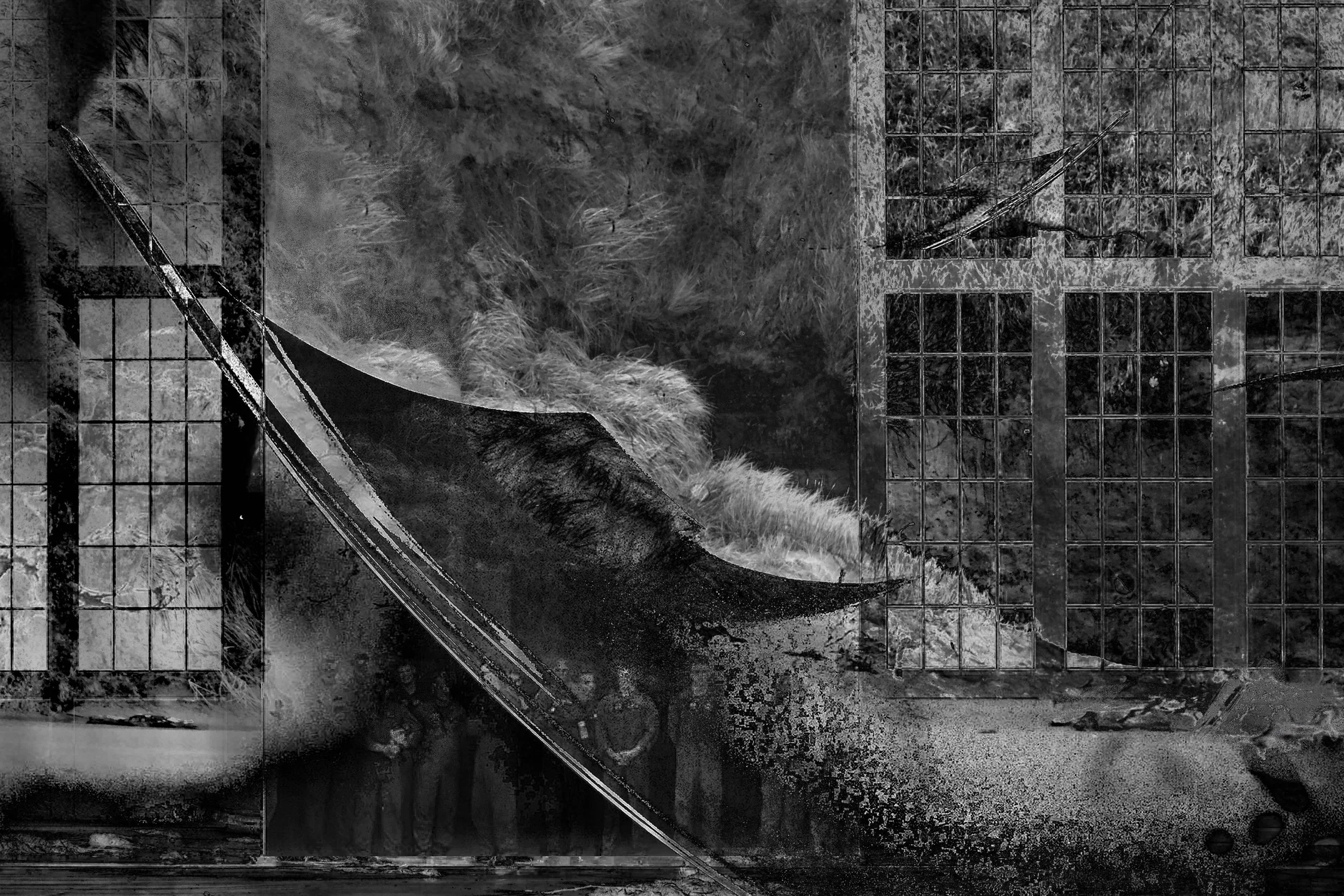
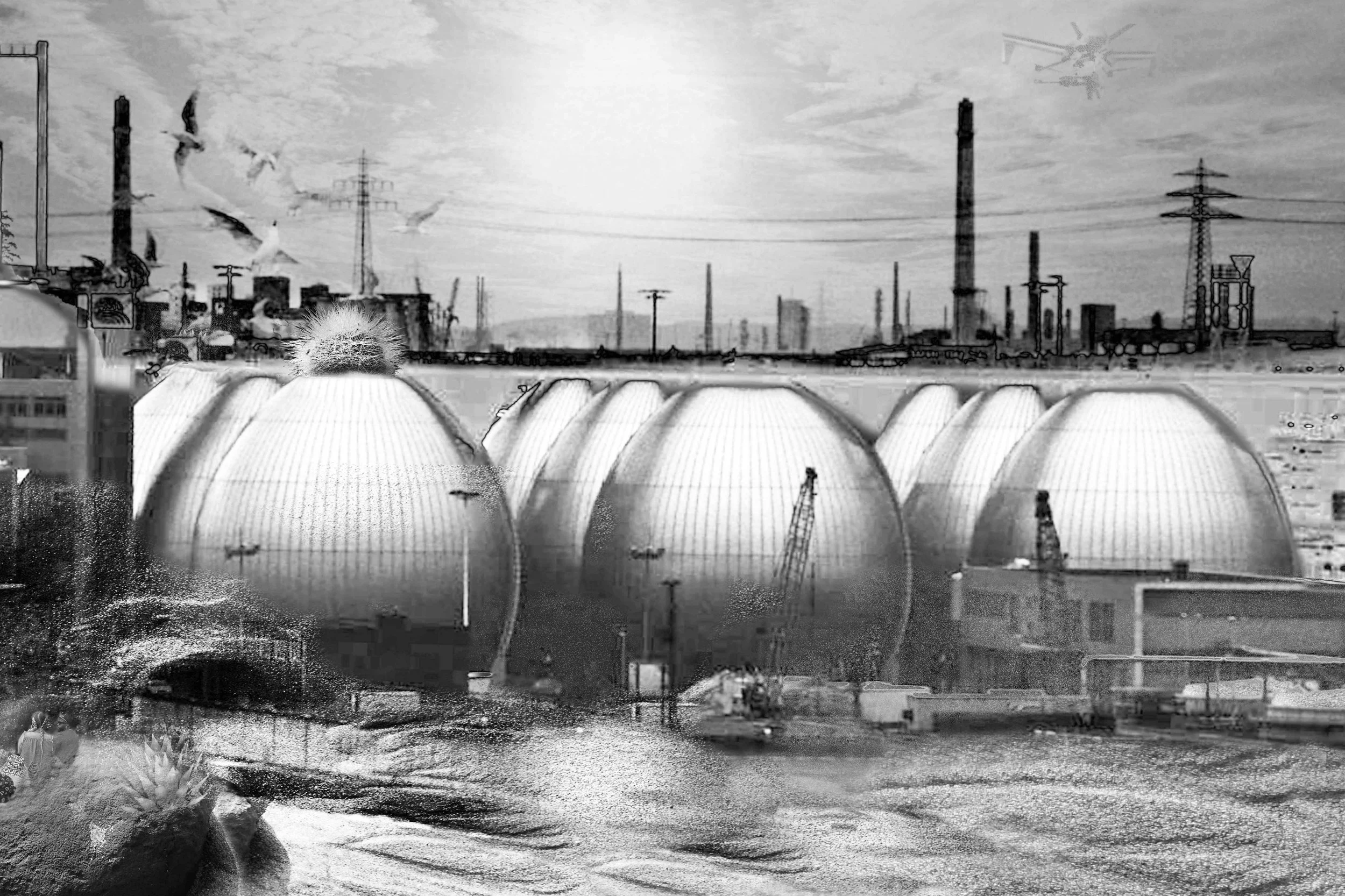
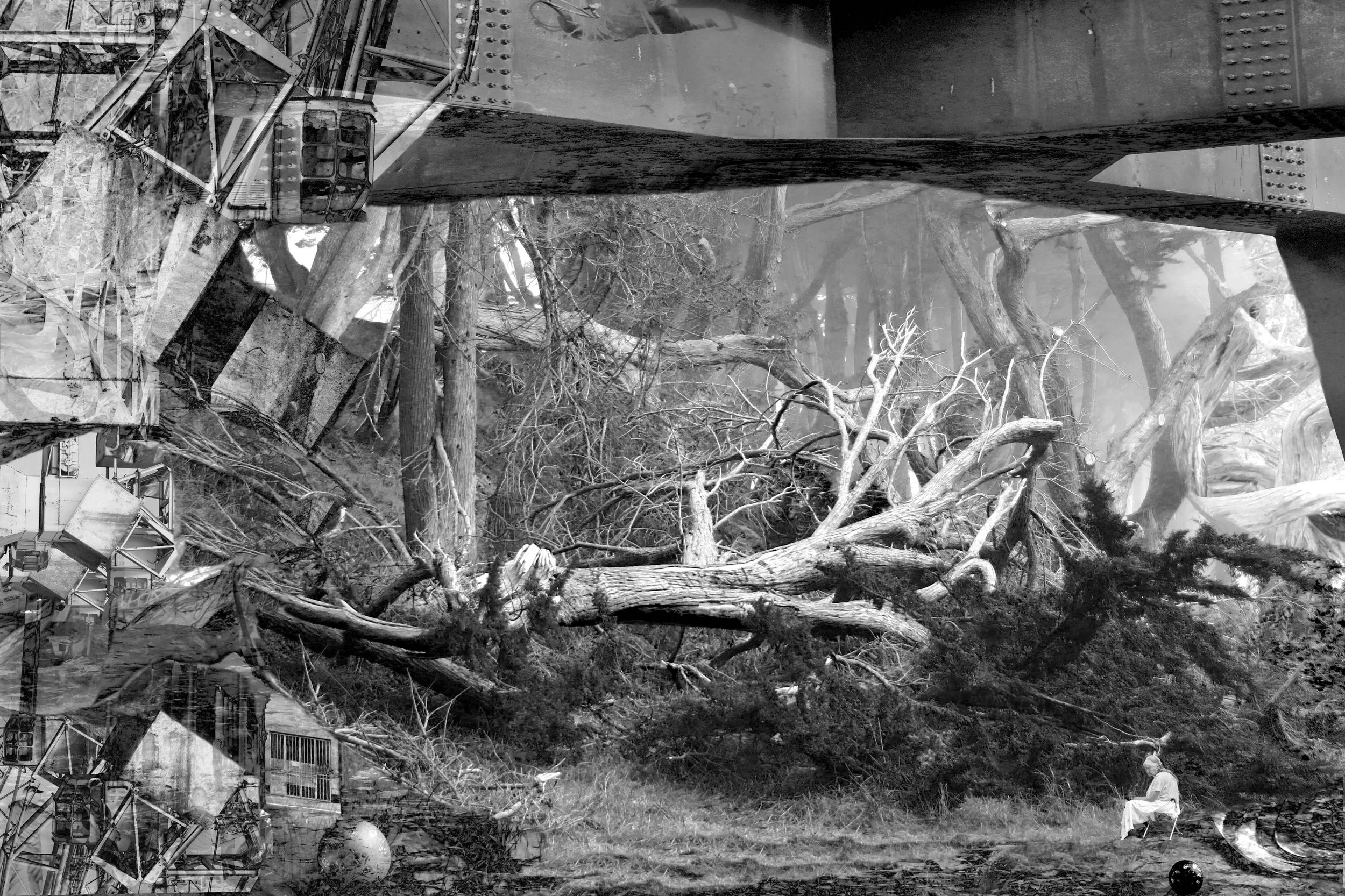
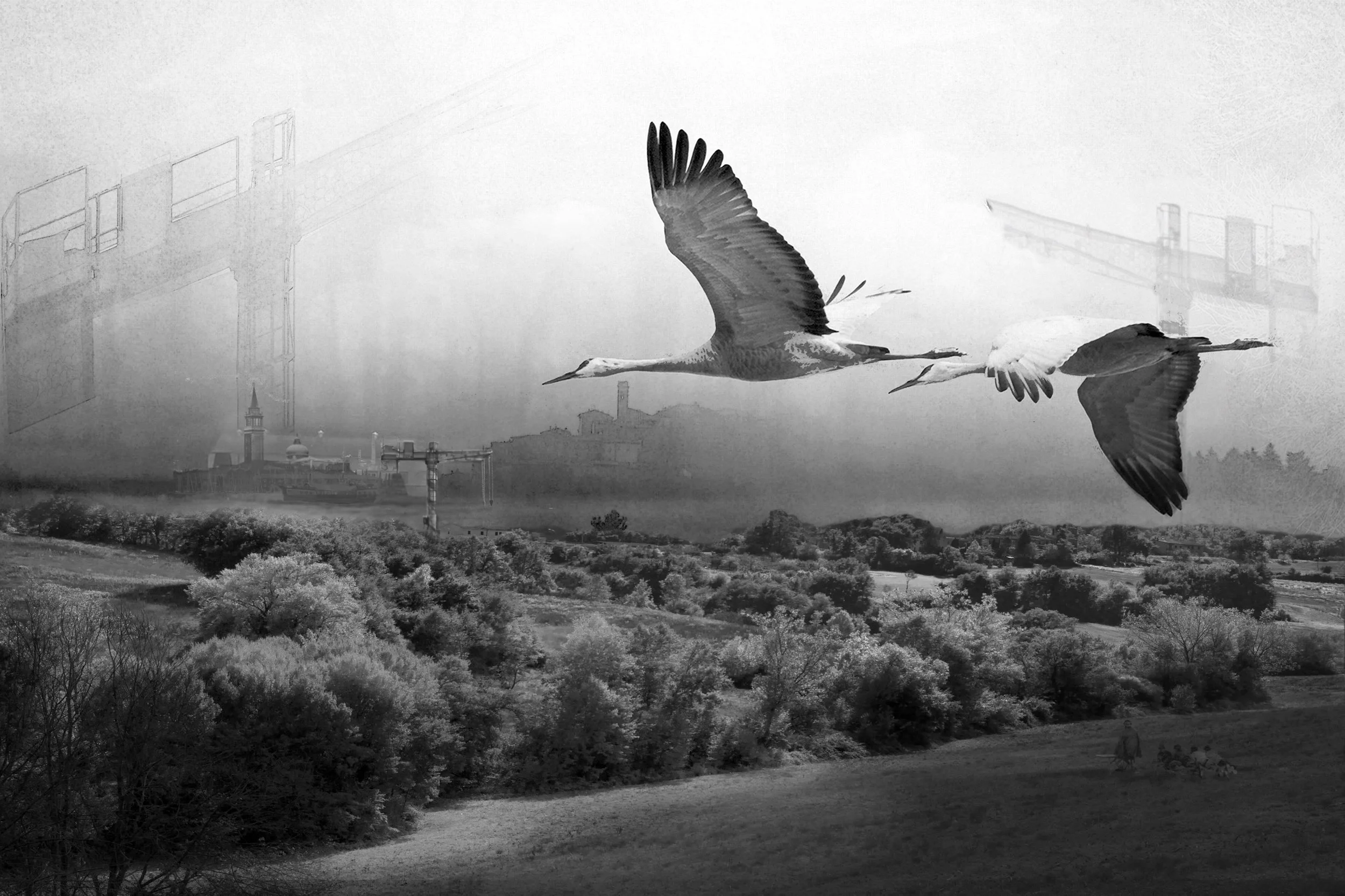
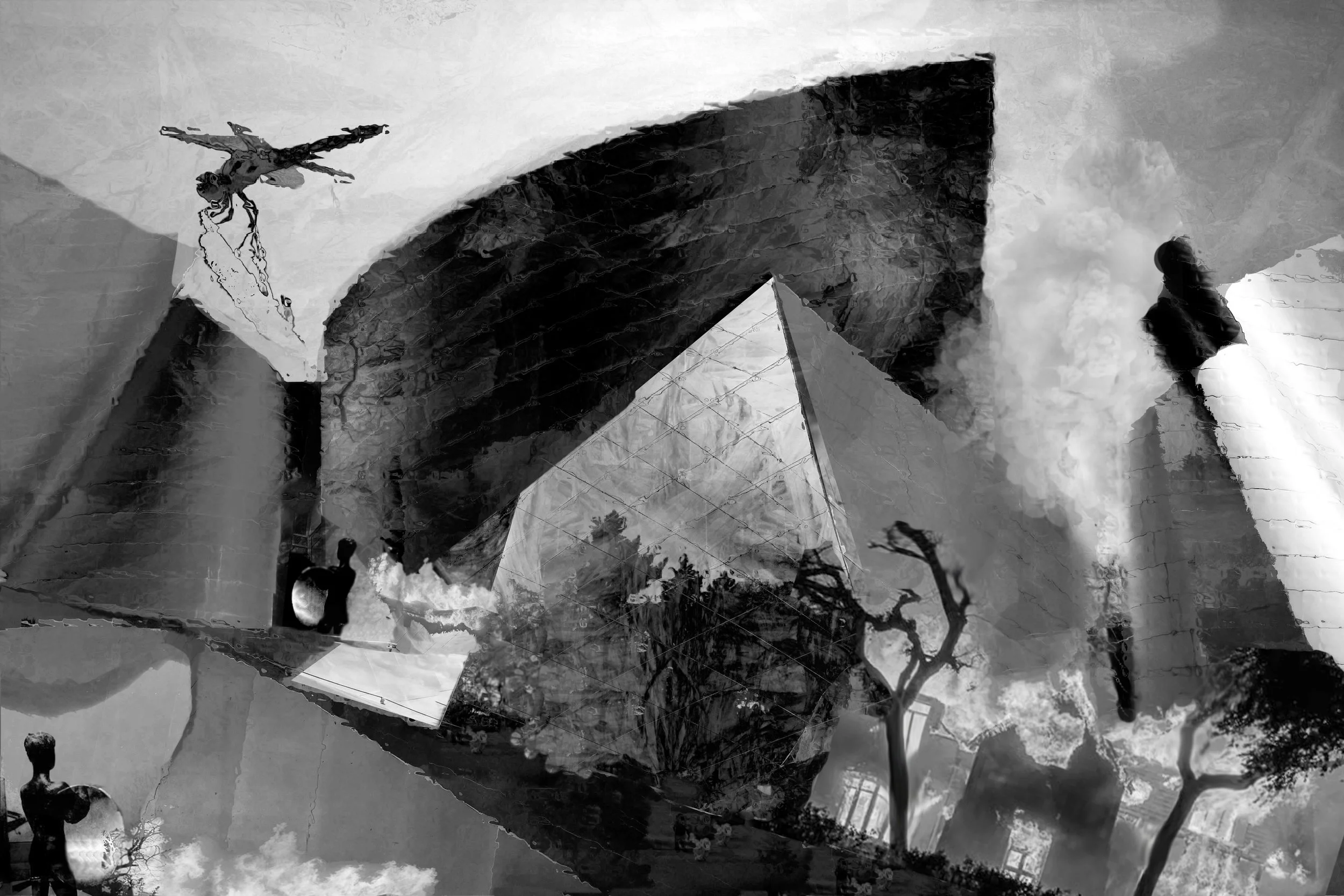
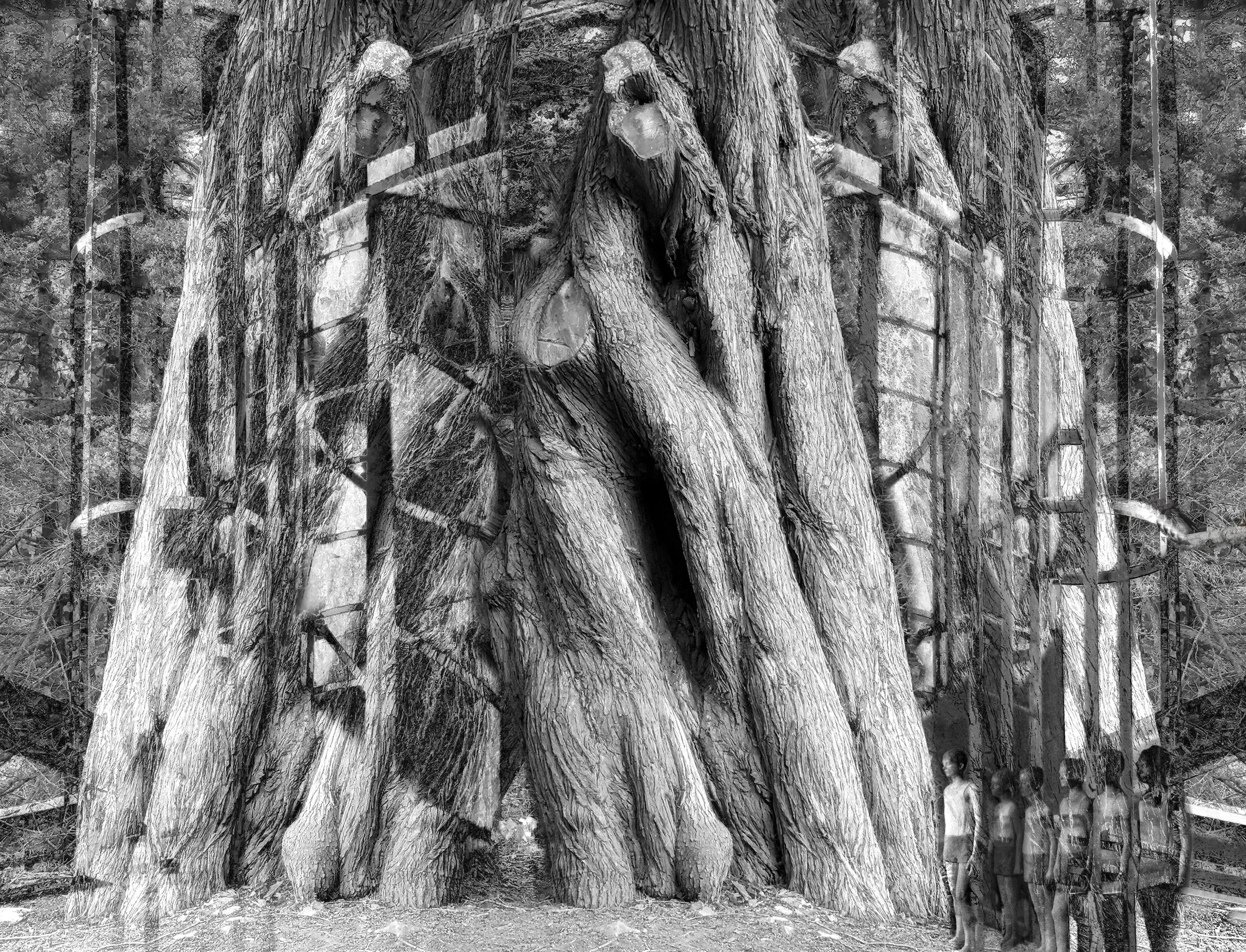
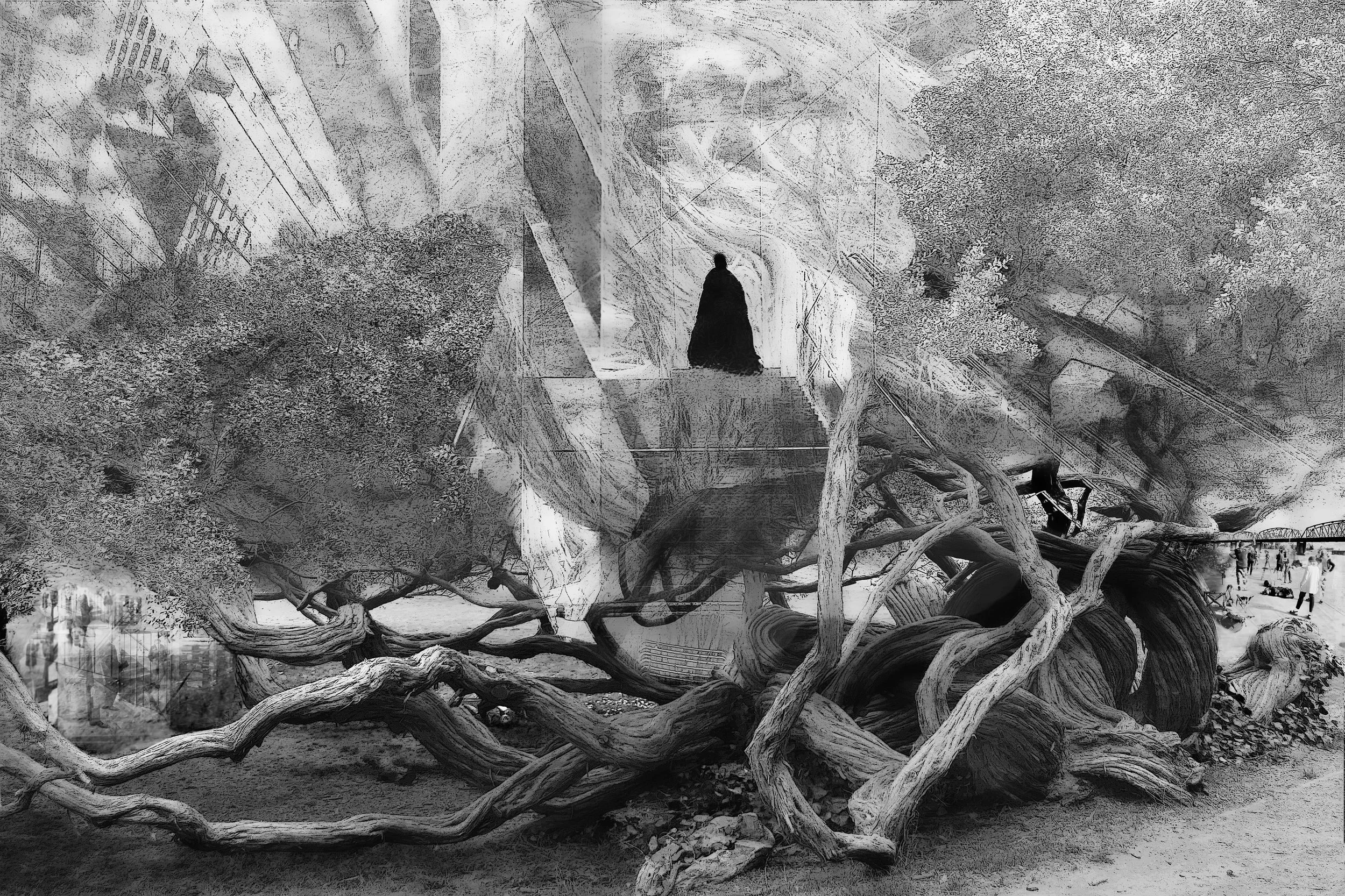
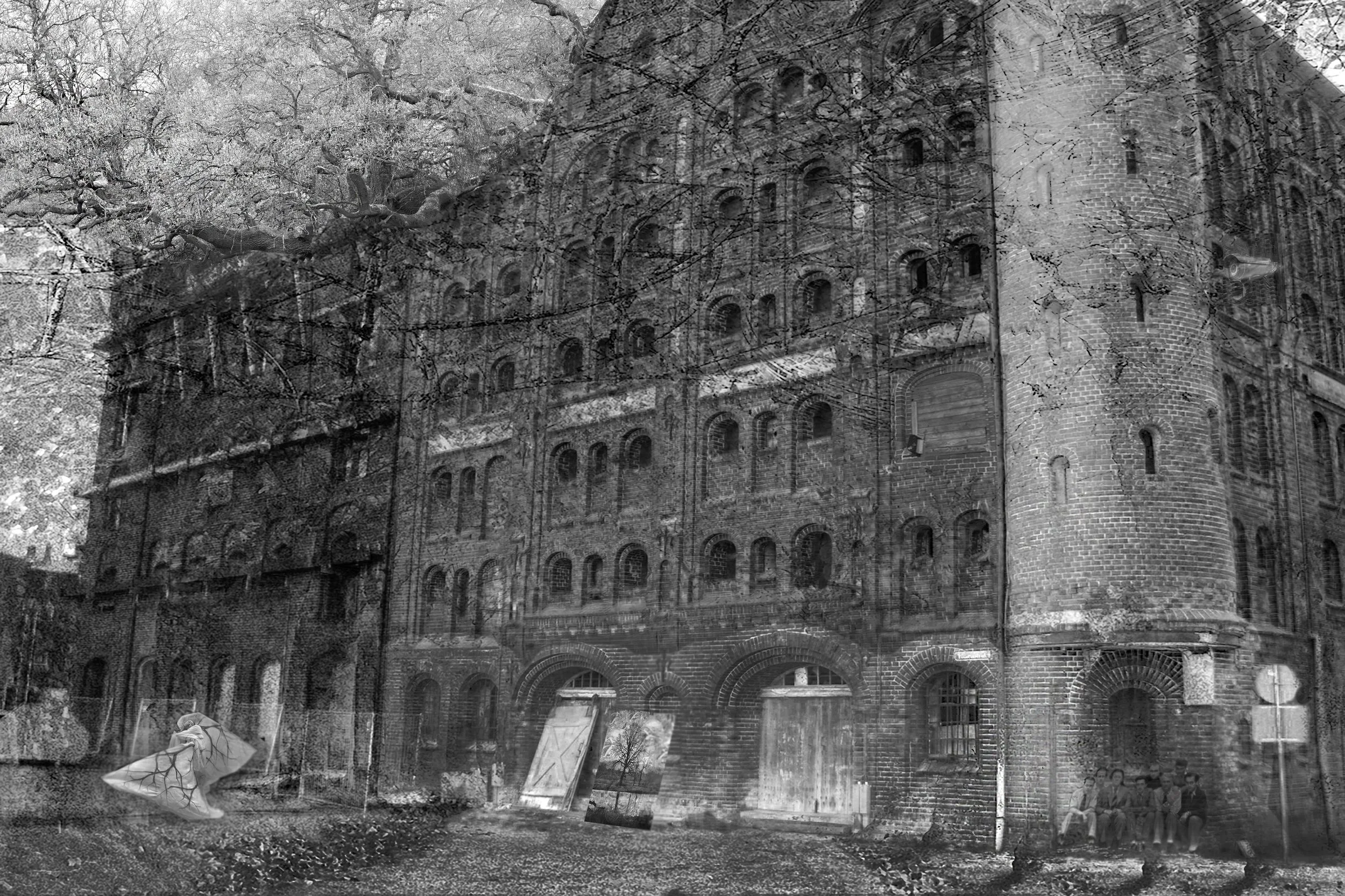
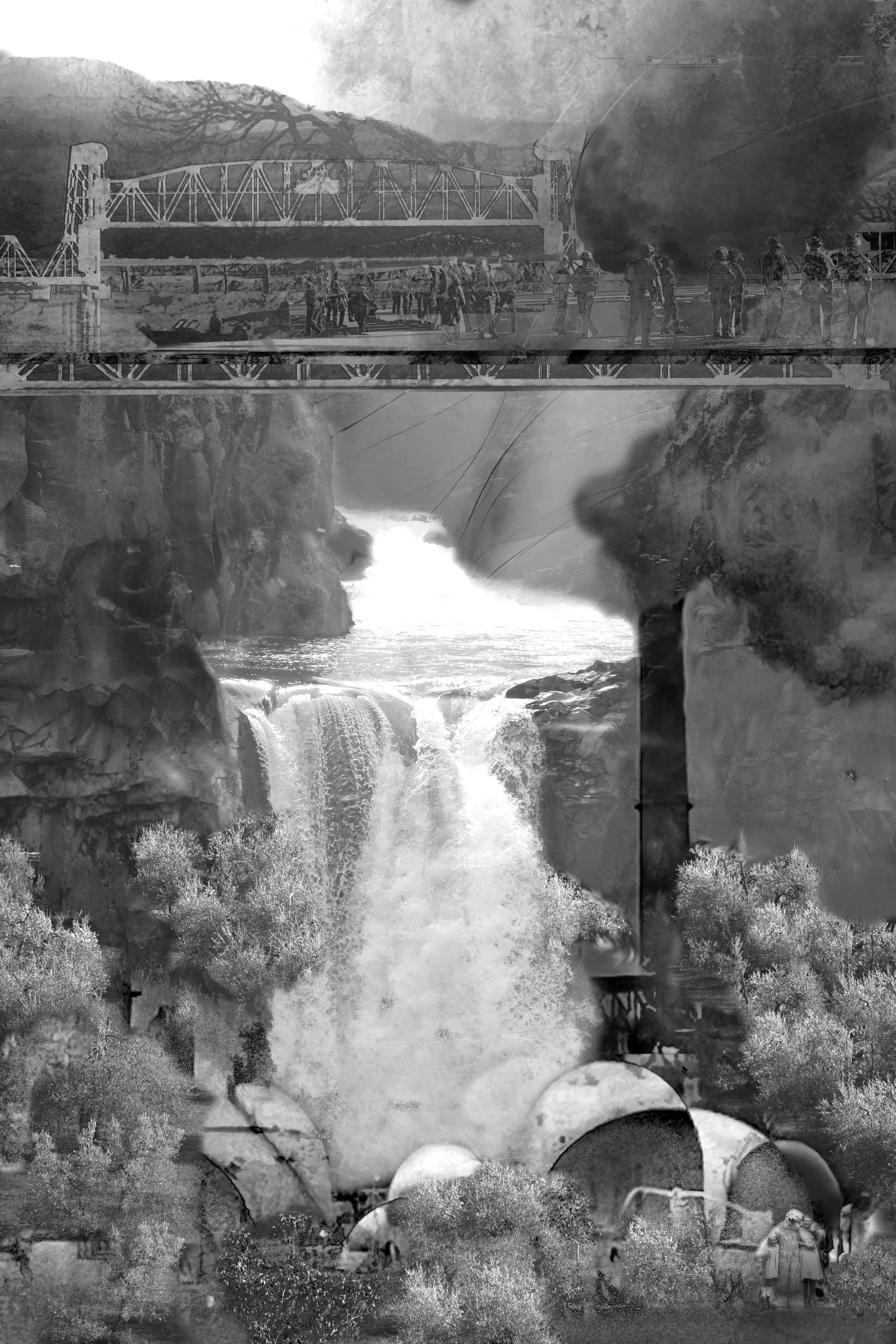
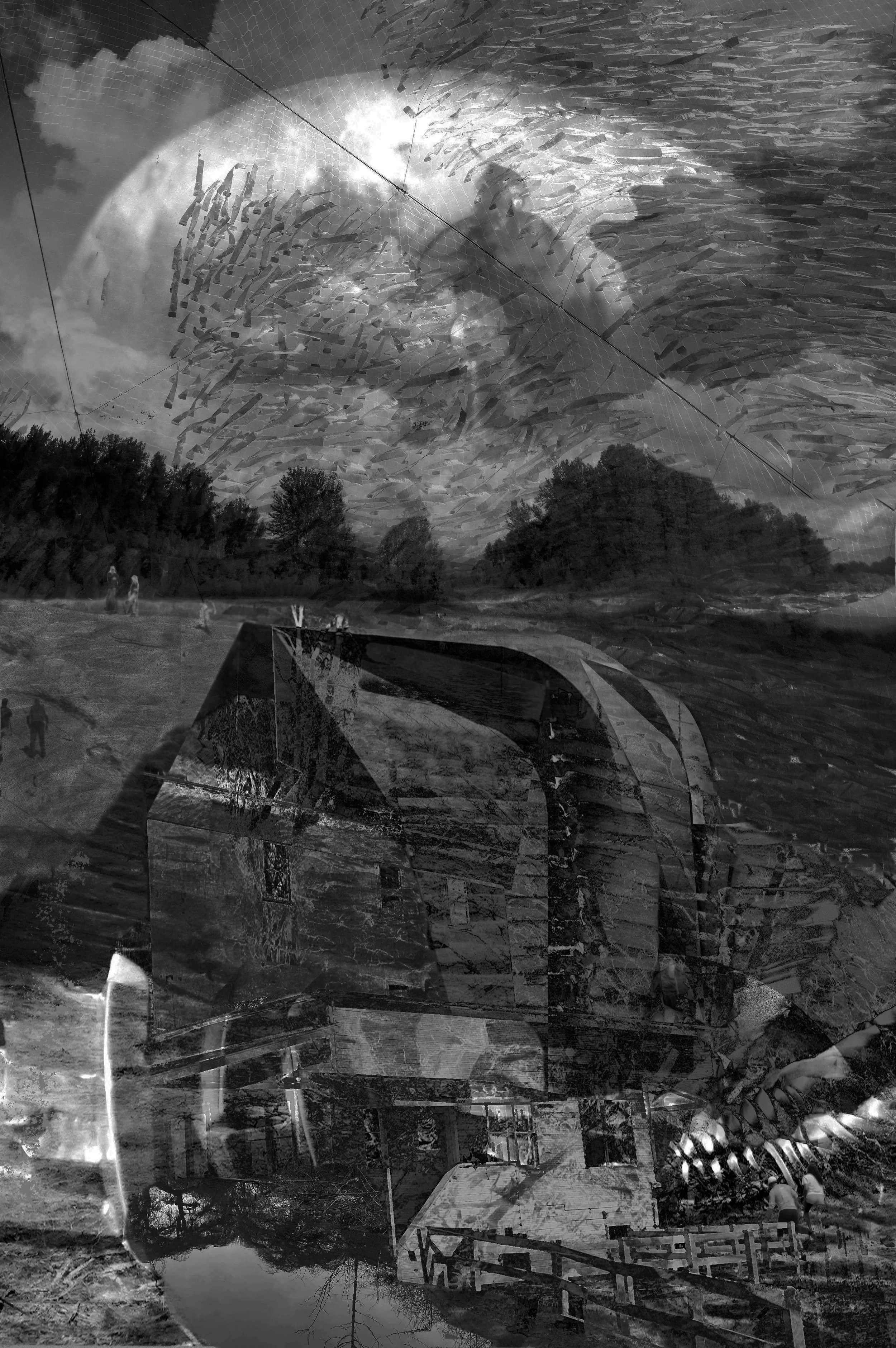
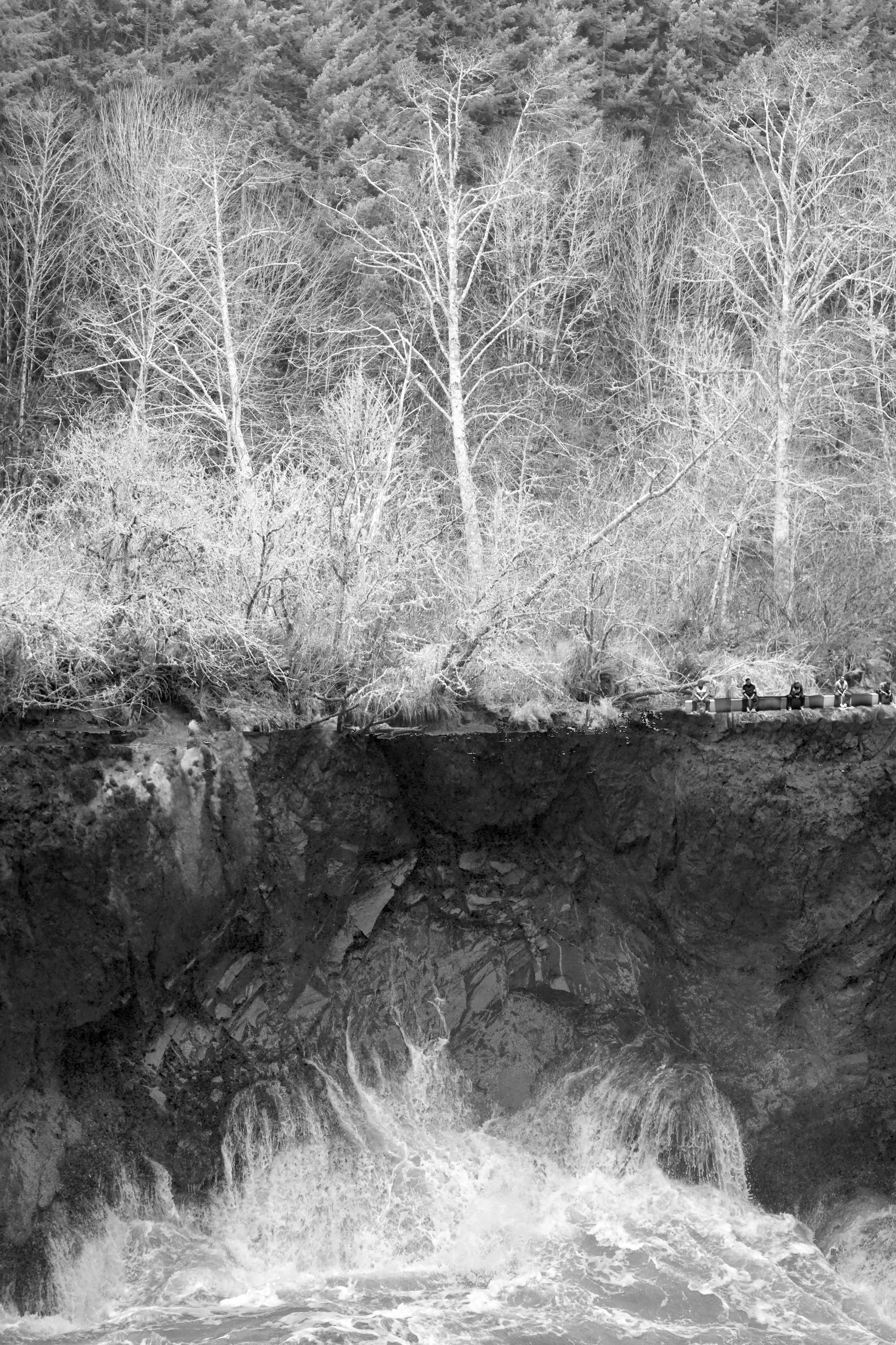
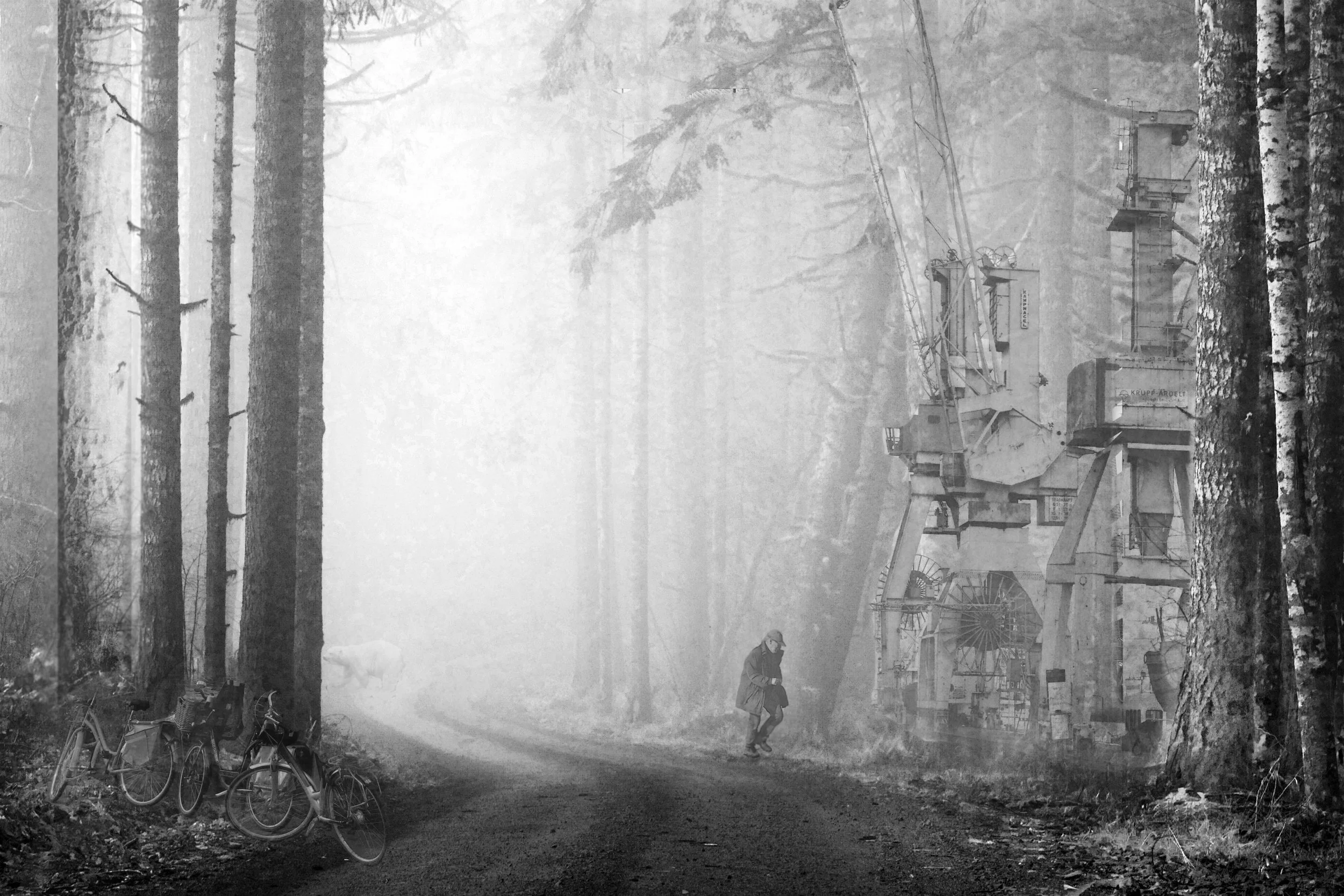
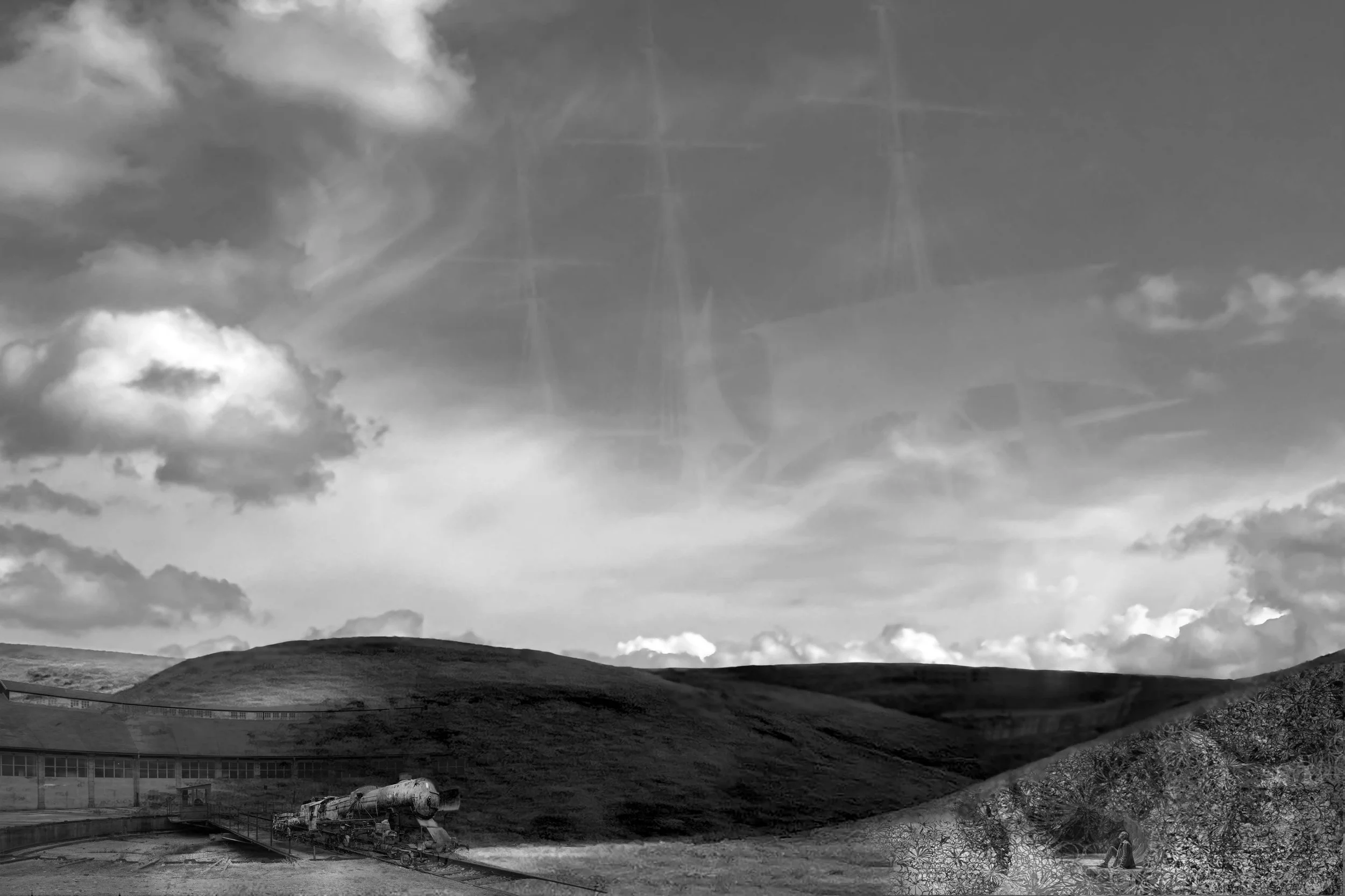
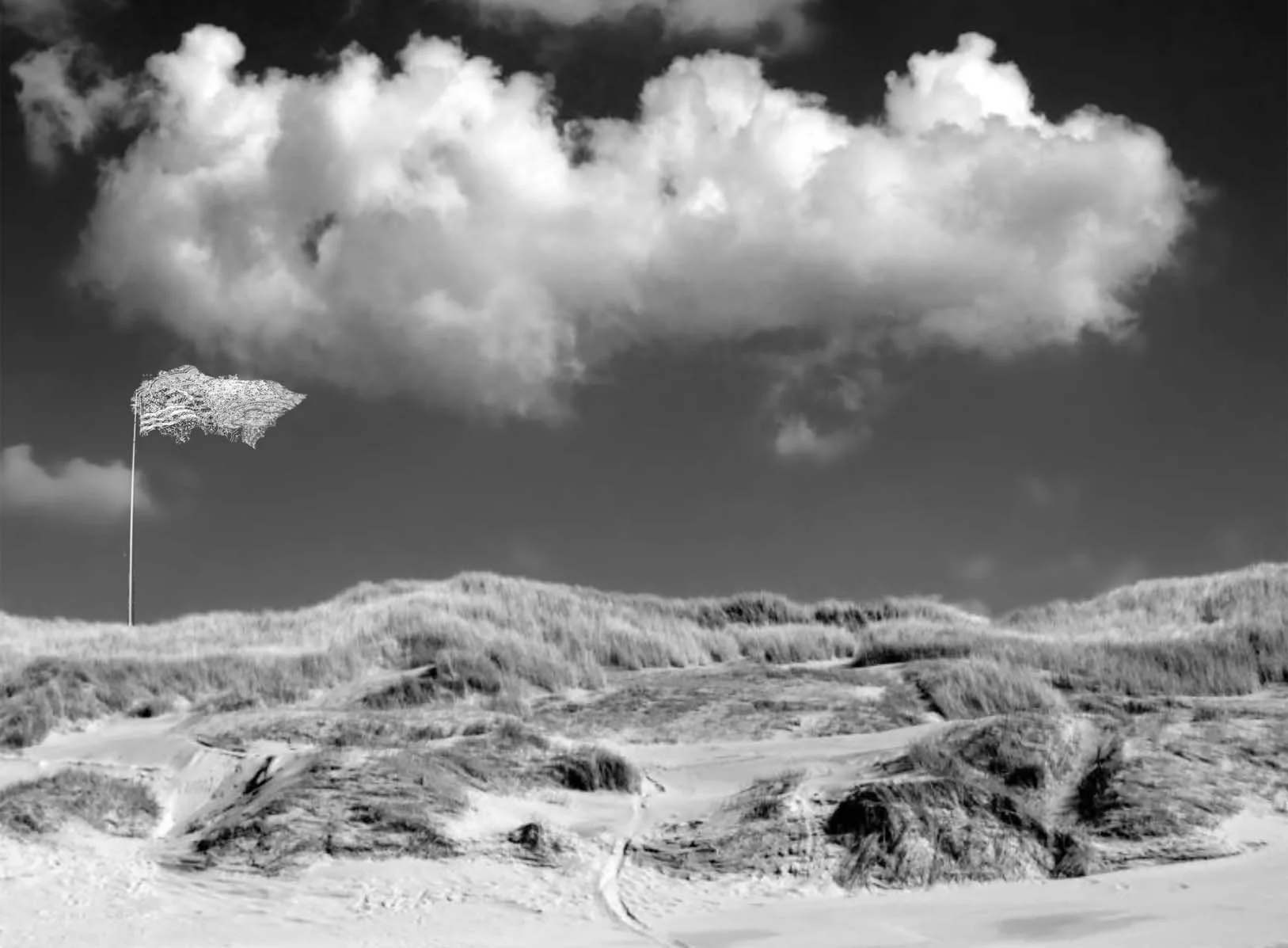
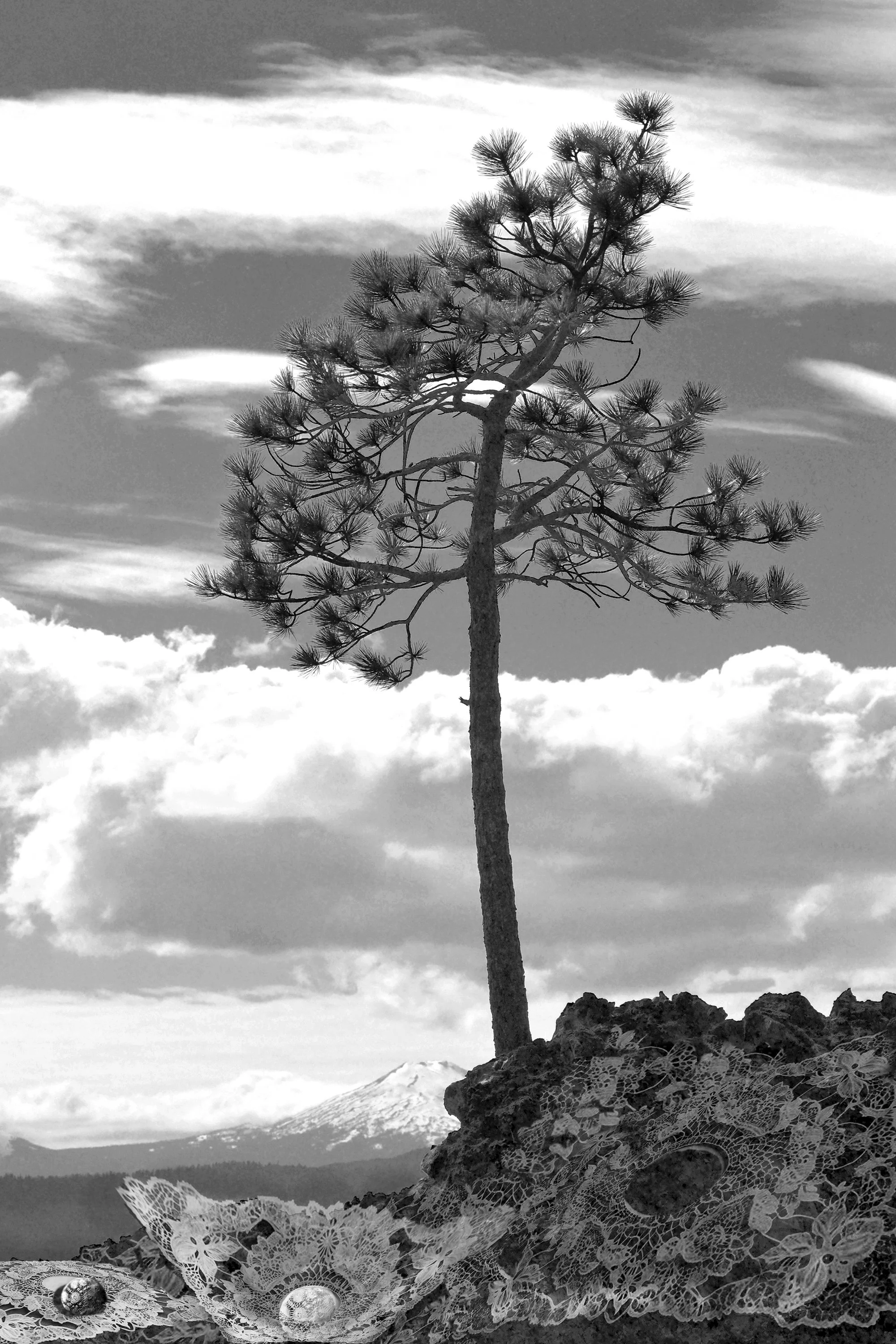
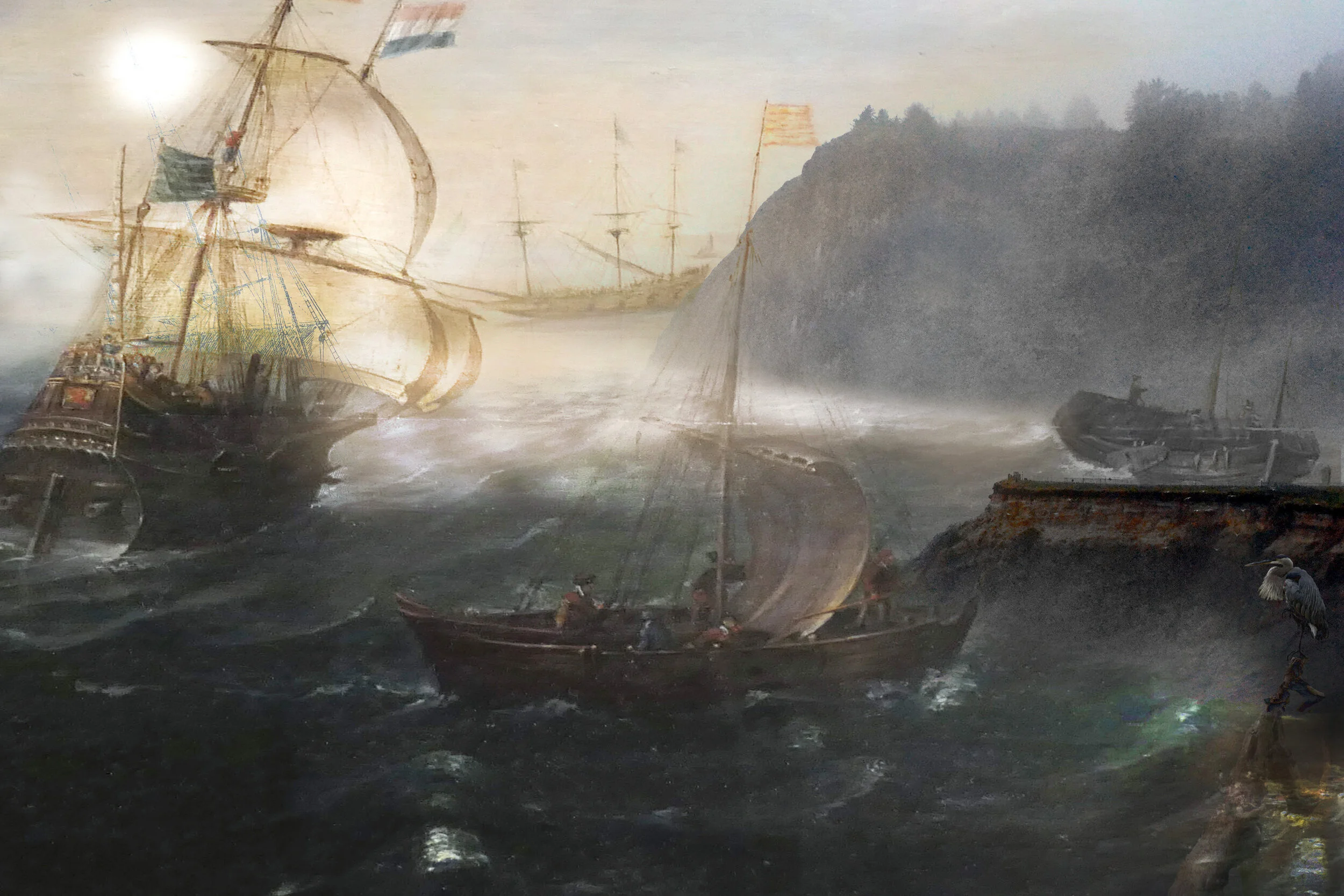
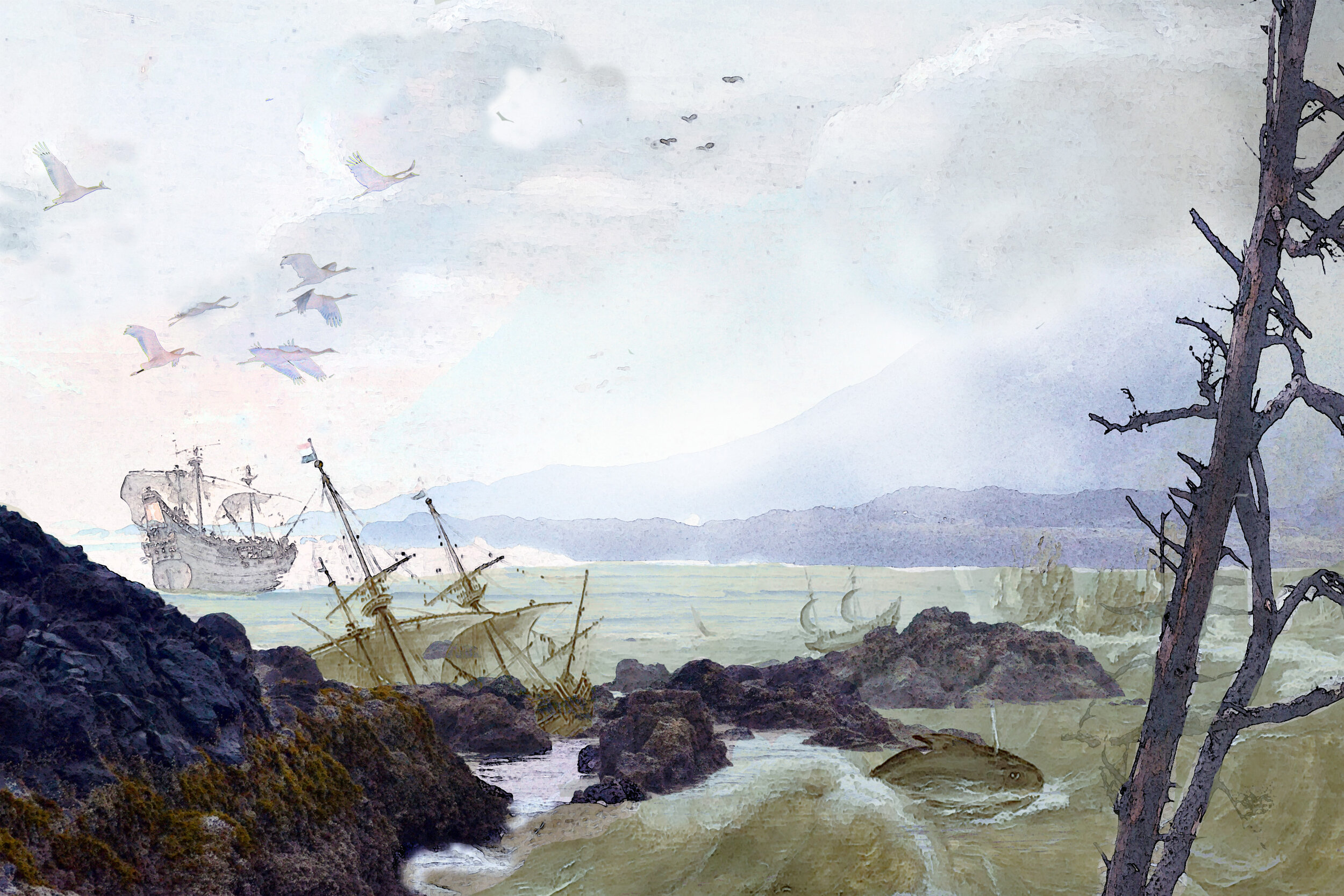
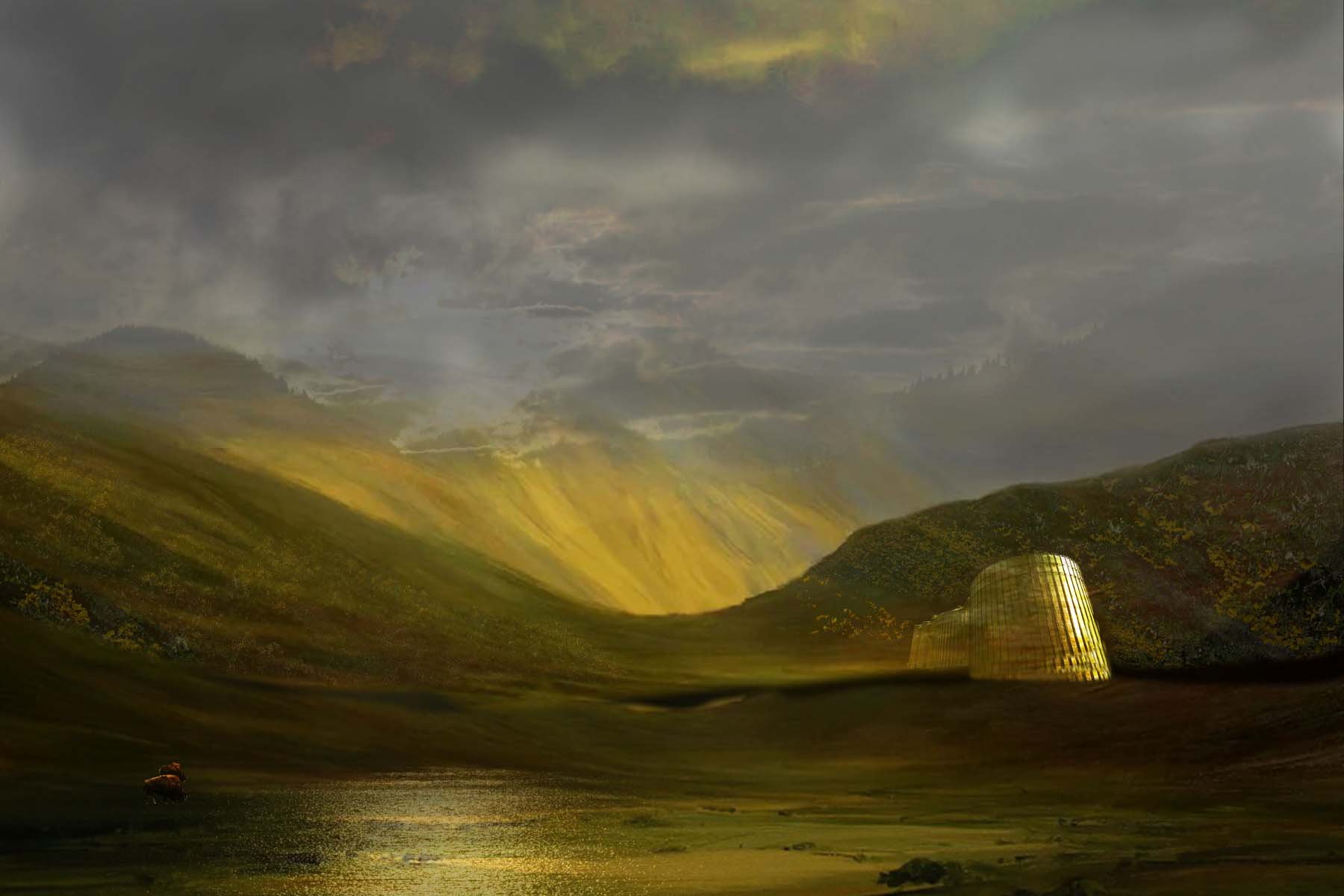
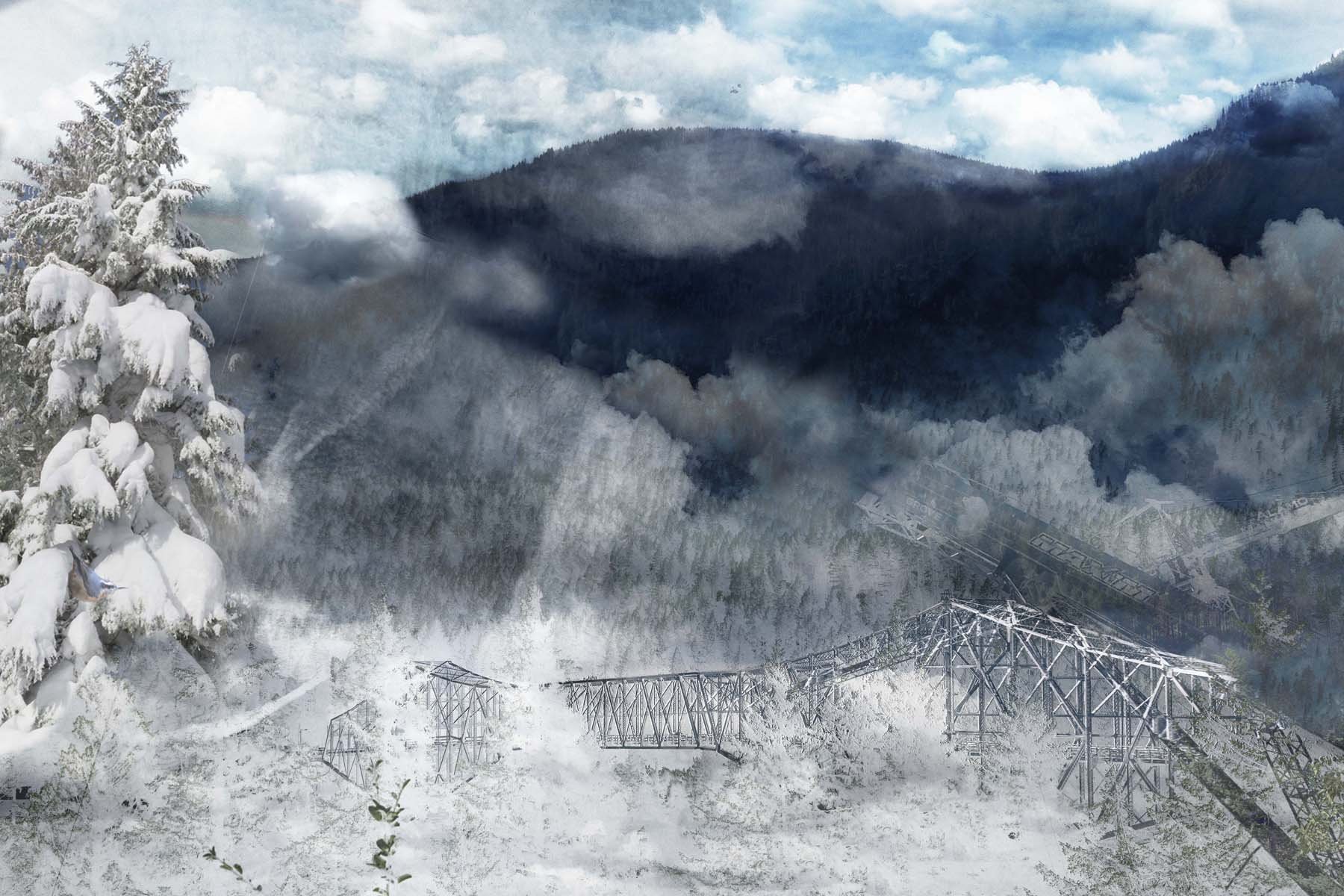
This ongoing (2026) photomontage project envisions a future where we find ourselves in a somewhat dystopian environment.
For centuries, we have ignored boundaries designed to ensure a healthy balance between humans and wildlife. By continual invasion of and extraction from natural habitats, we have been creating planetary conditions that cause endangerment and extinction of wildlife.
In addition, our indifference towards climate change, or our refusal to combat it, are captured in futuristic landscapes that see species migration and threats to our own survival.
It was important to me, though, to depict not just human folly – the continued use of tools of state violence and war, the disregard for nature as well as for communal well-being, leading to hunger, houselessness, exposure to violence and grief. I also very much wanted to feature human resilience.
People in these futuristic landscapes continue to work, play, pray and support each other and form relationships, even under circumstances forcing them to adapt radically. I refuse to think that there is no hope for a better world, even as I envision one that serves as a warning of a possible, even likely future if we don’t change direction.
Page shows some, not all montages of the series.
Archival Ink Pigment Print on Etching Paper, 21 × 16 inches, $475
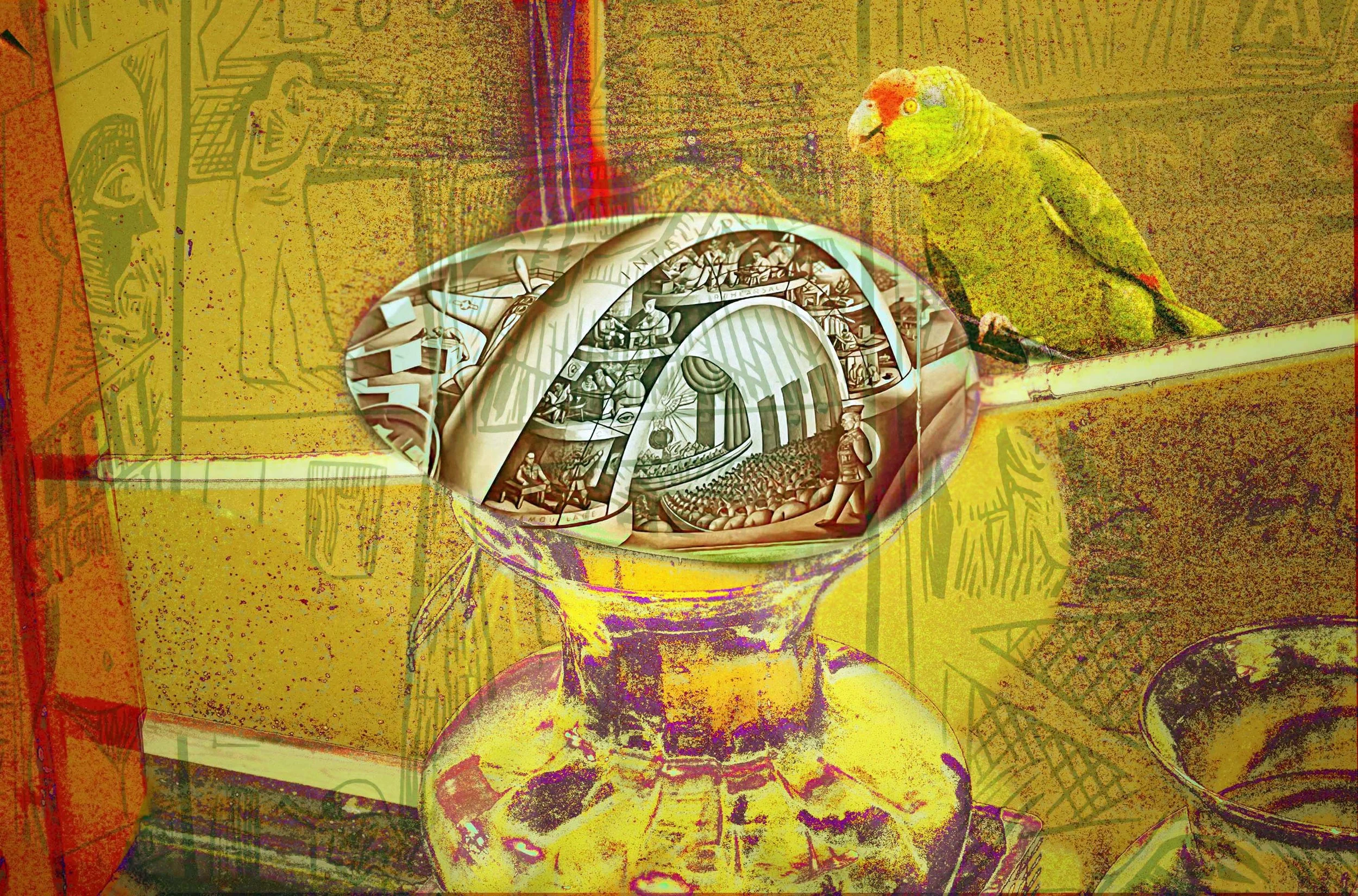
Jirayr Zorthian (1911-2004) came to the U.S. as a child to escape the Armenian genocide, later received an MFA from Yale, and eventually worked for army intelligence during WW II. He was commissioned to paint a large mural, Phantasmagoria of Military Intelligence, by the Office of Strategic Services. I photographed his sketches for the work while on his ranch in Altadena, before all was consumed by the Eaton Fire this January.
The drawings depict legions of young men squeezed into pipelines for preparation for military jobs, a surrealist depiction of a process meant to harden and prepare them, both, physically and psychologically, for battle. A traditional masculine world, infused with violence.
Zorthian's pipelines of military recruits struck me as a perfect symbol for the scores of young men now flocking to authoritarian institutions associated with a focus on hollow, misogynistic masculinity. The indoctrination by toxic political radio hosts, piping fake news and hate speech through their channels, also seemed to be anticipated by the convoluted apparatus, misleading young men who are trapped in social isolation. I decided to create photomontages of snippets of those murals embedded in classical still lifes for several reasons. For one, I never forgot a lesson received as a 12-year-old from a Hungarian refugee, trained by Joan Miró and inexplicably ending up as an art teacher in a small German village. Firmly established during the Dutch Golden Age, with riches accumulating from colonial exploits, still lifes provided a voyeur's description of what the rich possessed and the poor envied. They assured the wealthy, who commissioned and paid for those beautiful renderings of their belongings, of their status and reminded those who struggled that there was something to aspire to. A notion of hierarchy, class defined. Yet still lifes also remind us of domestic beauty, care of the household with the provision of food or flower arrangements, all "women's work." This is particularly pertinent given the current fashion of "trad" wives, women who re-enact the traditional roles of earlier eras, trying to serve their husbands and family and create feminine beauty round them, preferably “instagrammable”. It is about aesthetics, but with a barely hidden underpinning of ideological beliefs about gender roles, just as the early still lifes were about class hierarchies.
I also added photographs of glass and porcelain electrical insulators to some of the montages. Zorthian was an avid collector of these things and embedded them in all his various building projects, inside and on top of walls. They sure were perfect phallic symbols, speaking to issues of masculinity.
But for my own purposes, the idea of insulation - something being prevented from affecting something else - makes perfect sense representing the politics of the moment. Polls suggest today's young men and women are more polarized than any other recent generation on questions about feminism, gender roles and women's rights, with a frightening increase in sexist attitudes.
On a societal level, we are insulated from half of the nation, not knowing what they believe or how they could possibly believe it (and vice versa), no longer experiencing a shared reality. Large swaths of the population are living in some kind of phantasmagoria, a landscape of mysogyny, sprouting conspiracy theories fertilized by denial of and hostility towards science, extending so far to question the validity of vaccines, and religious fervor that preaches Whites over all other races, Christianity over other religions and the superiority of men over women. Unless we face this reality, women will not be able to defend their rights, from bodily autonomy to access to voting, from no-fault divorce to succeeding in the economic and public sphere, all rights fought so hard for by previous generations.
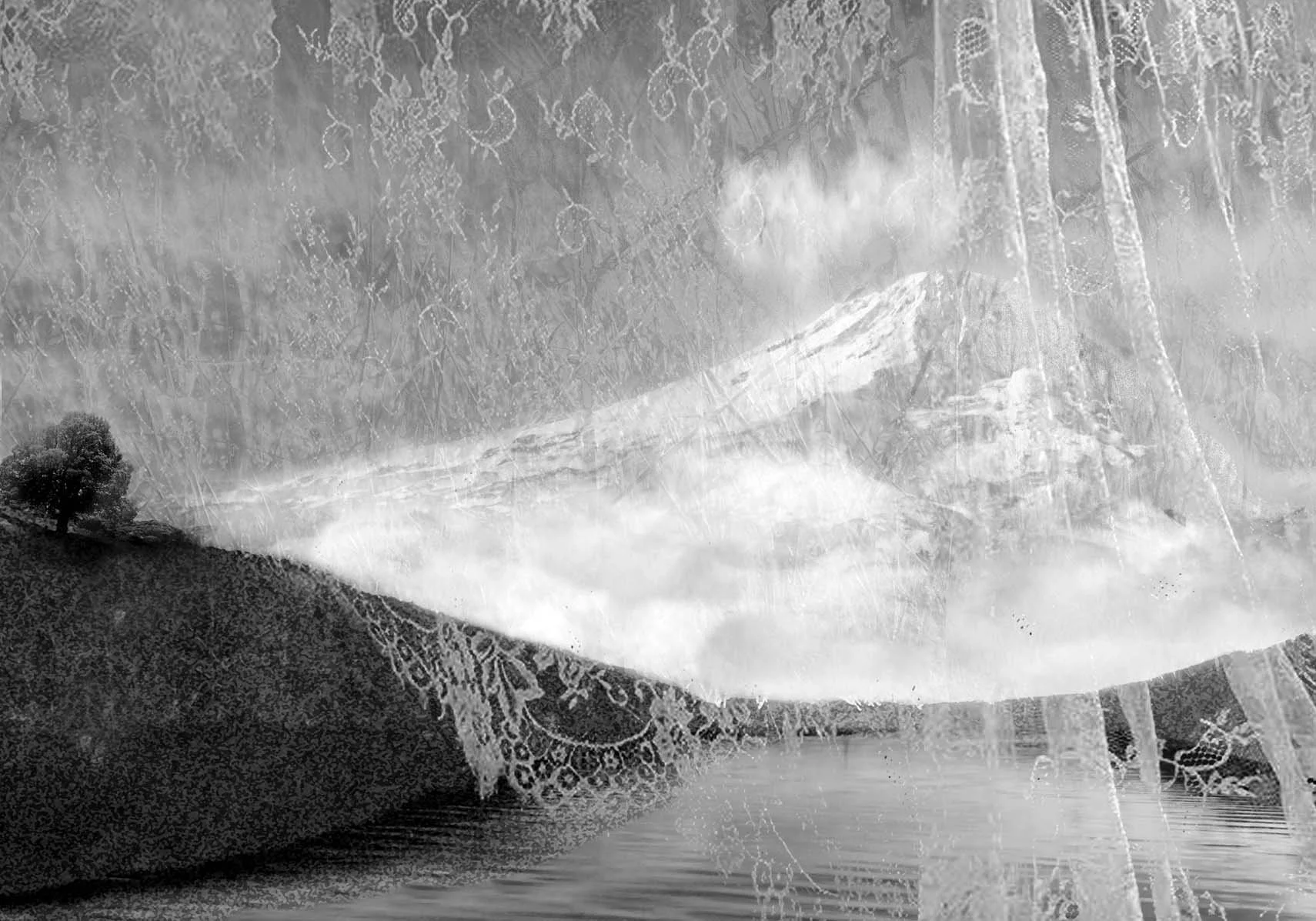
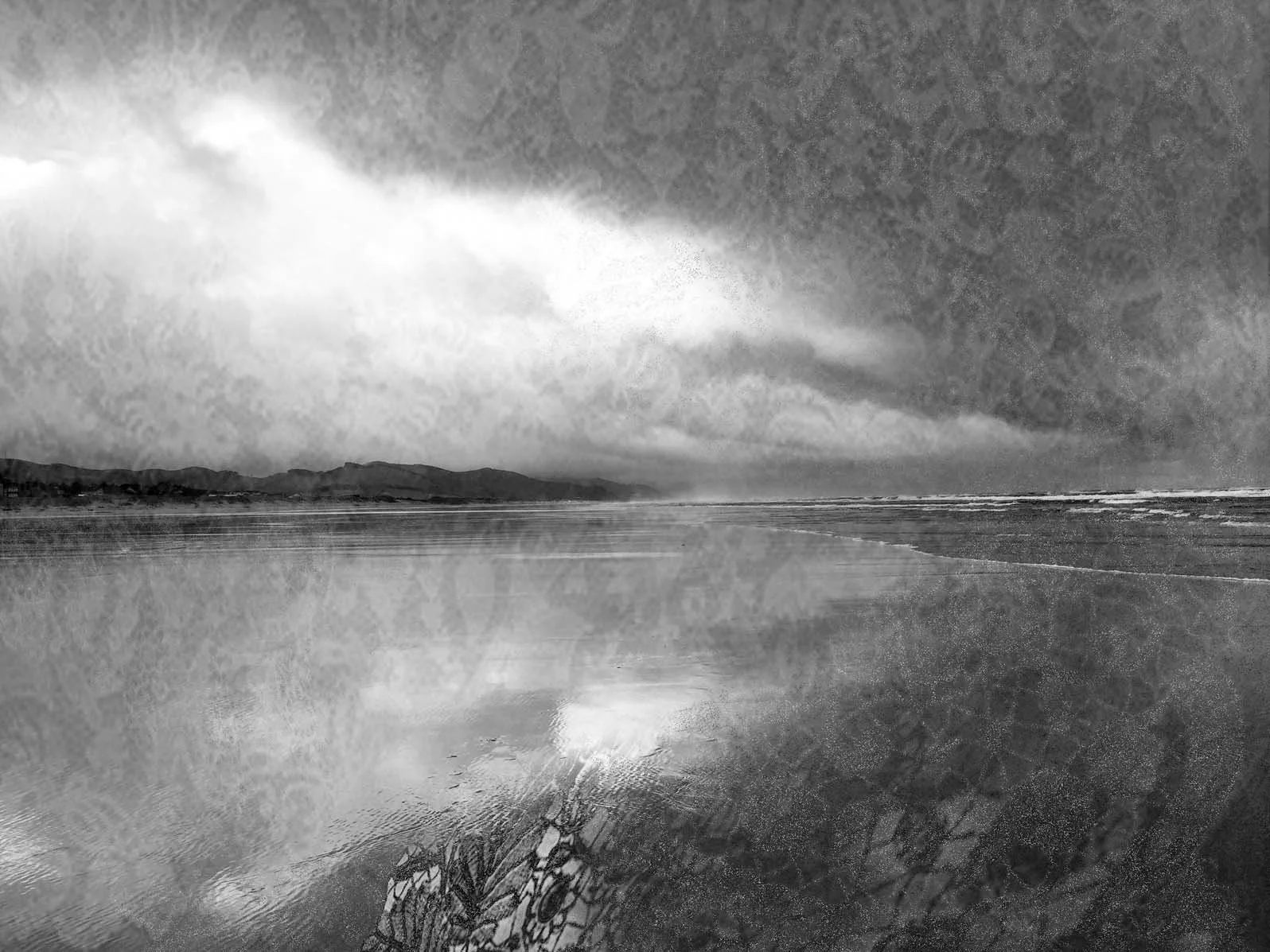
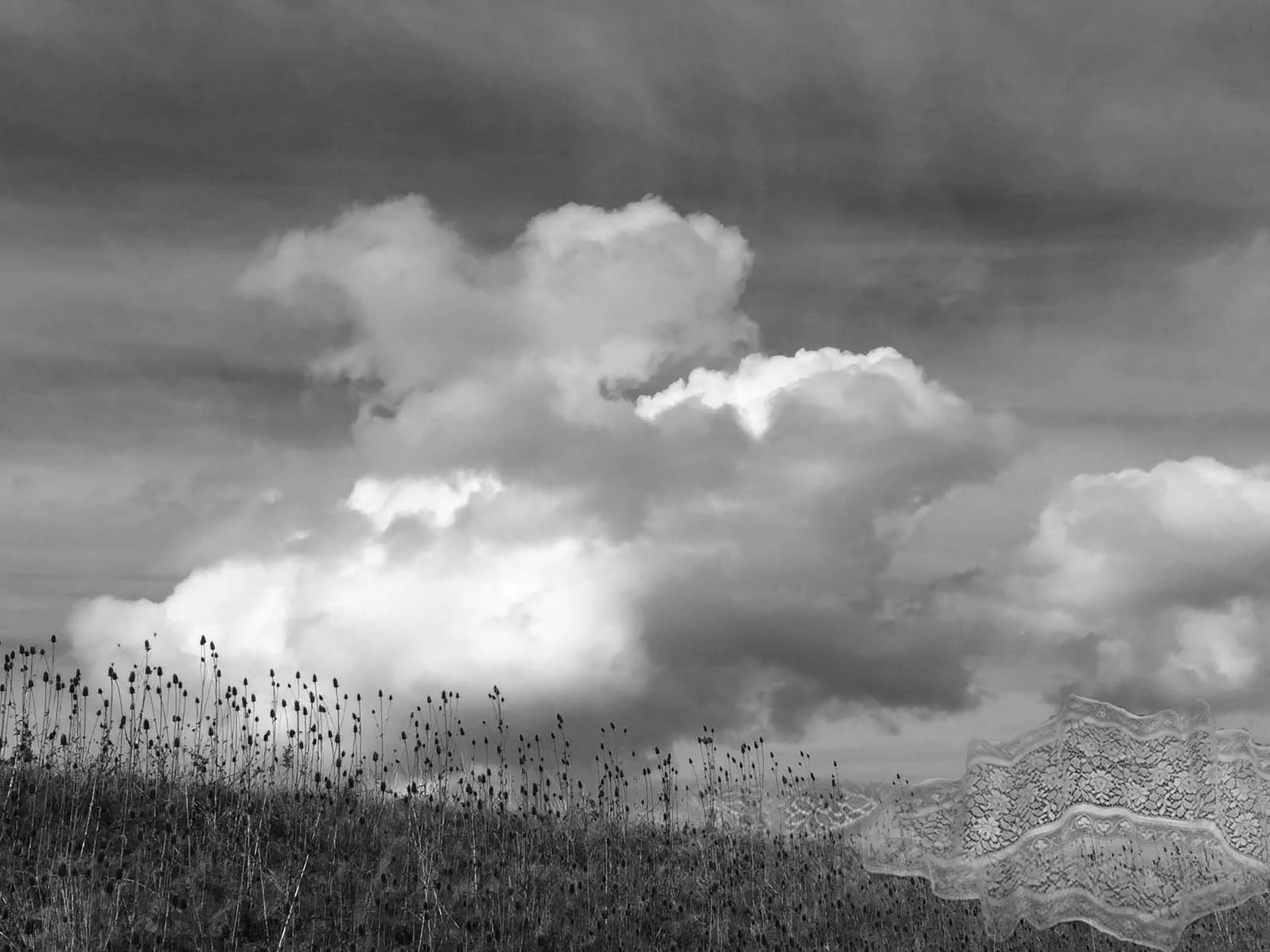
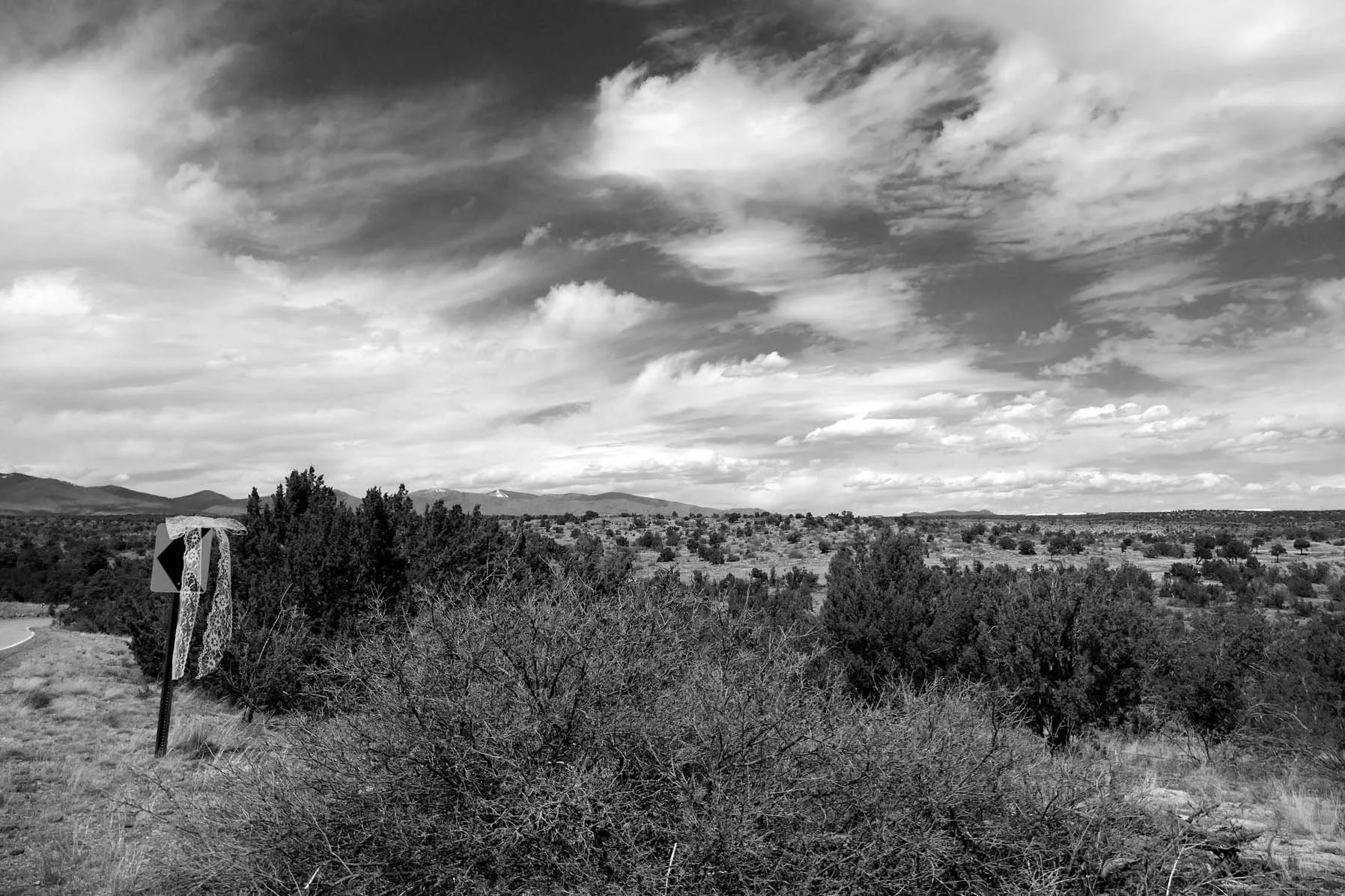
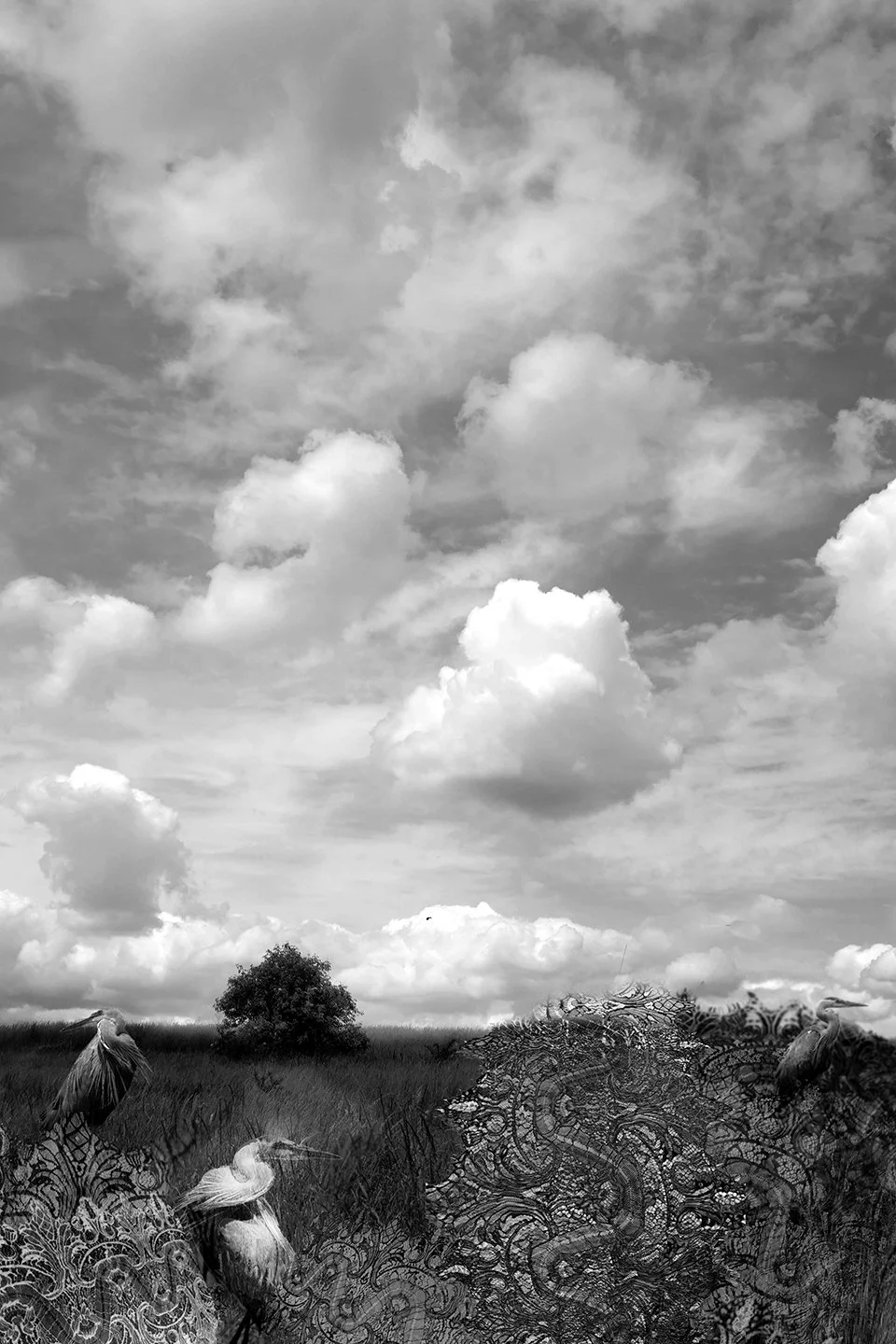
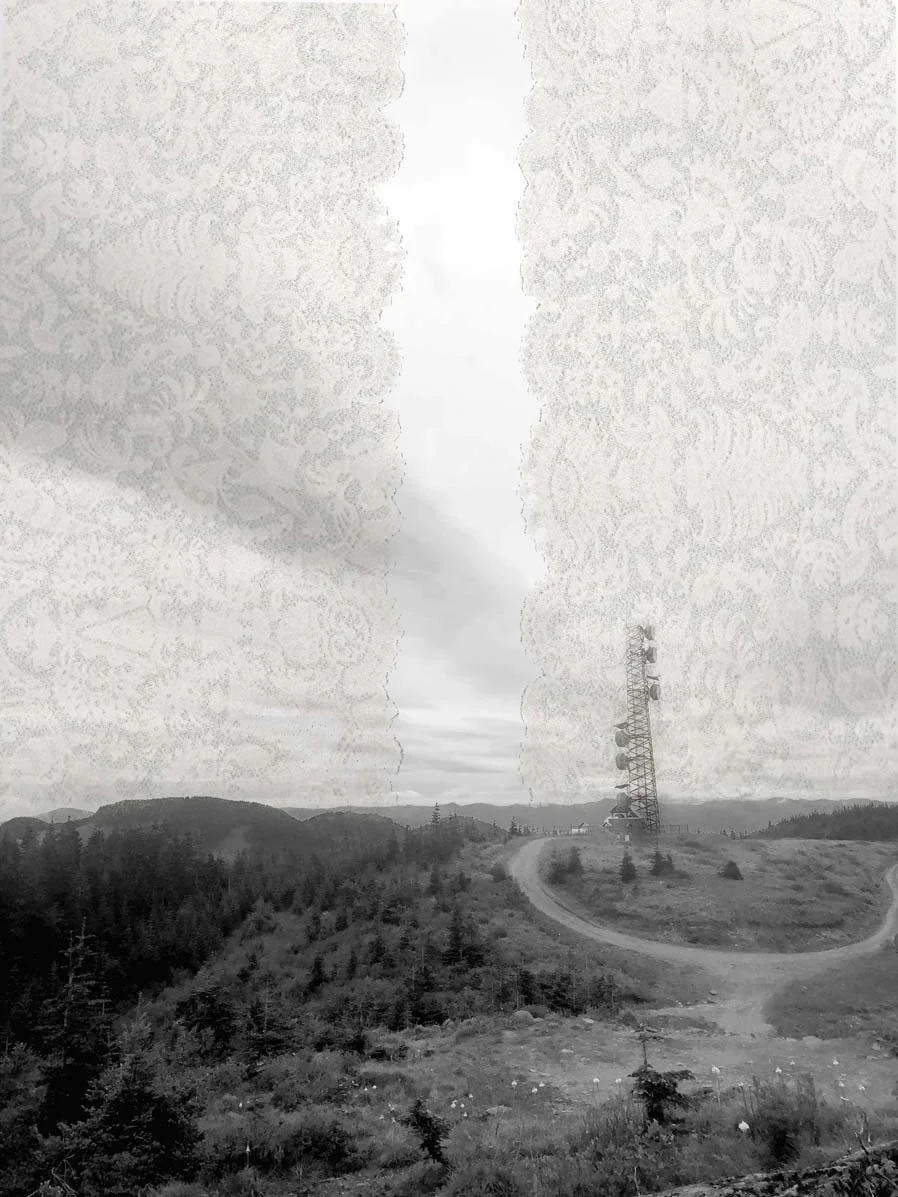
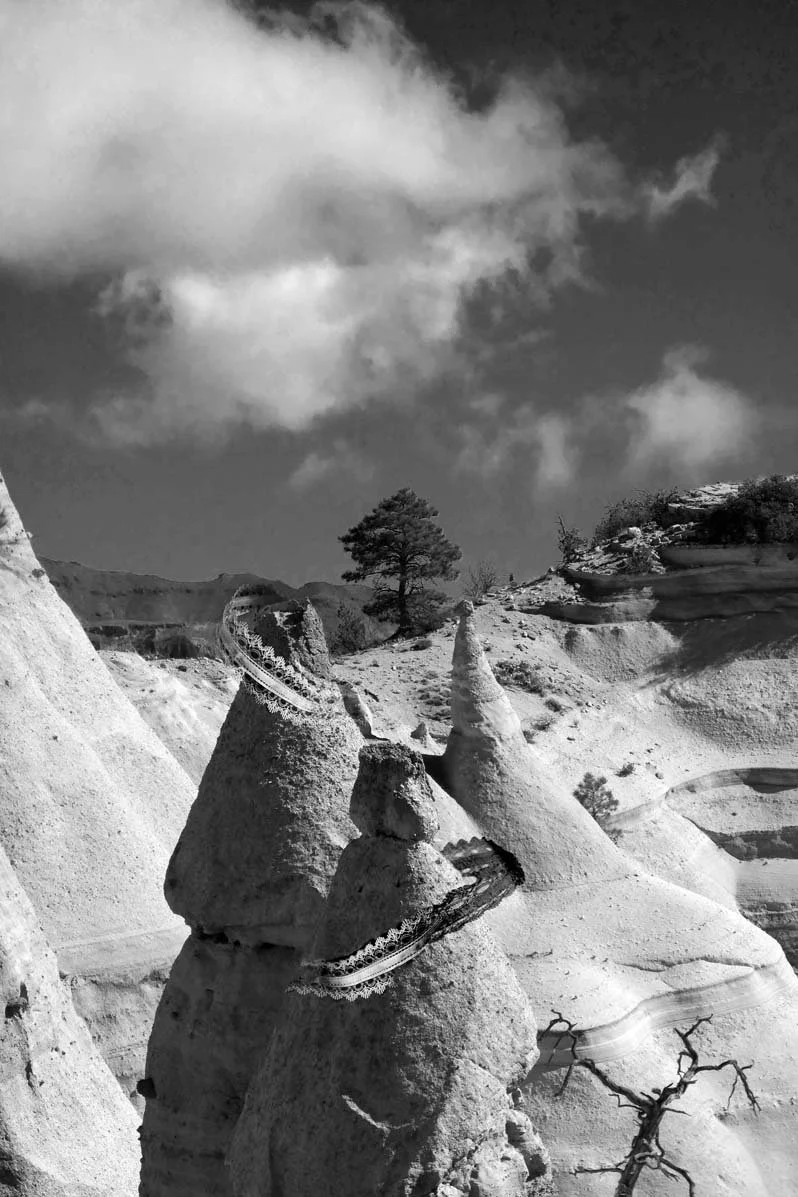
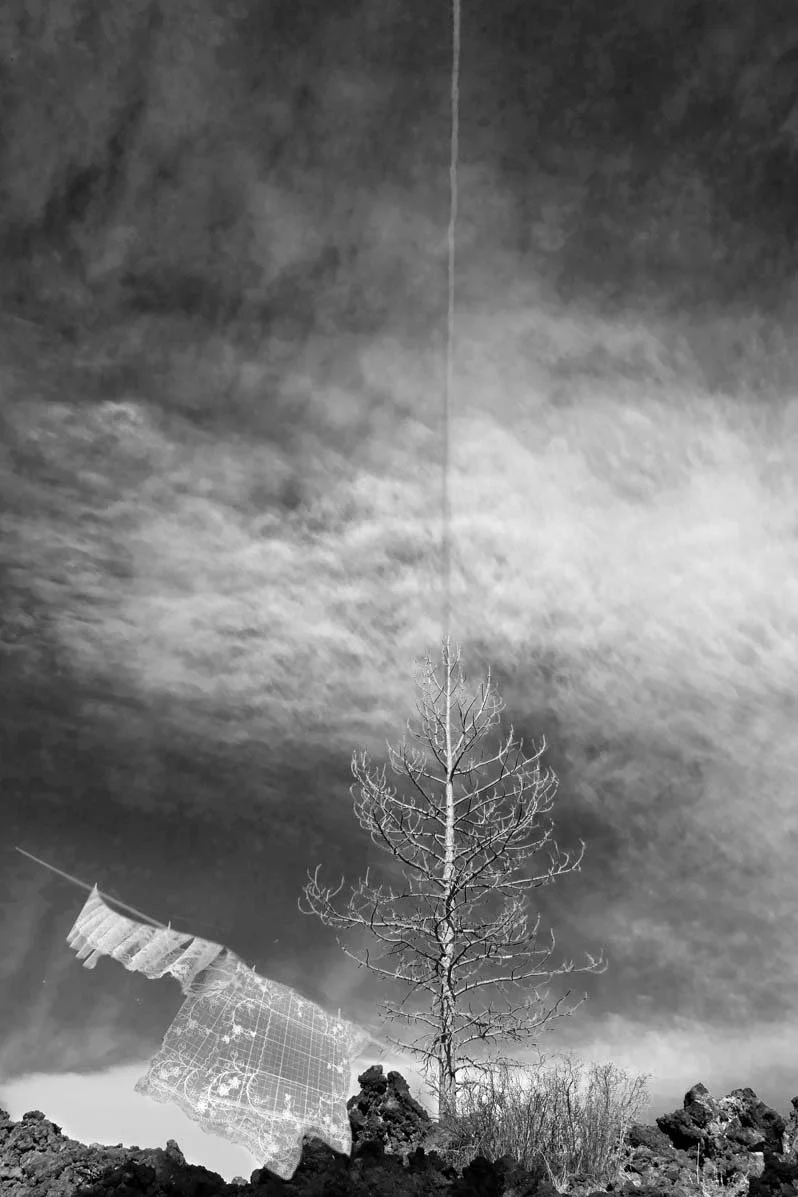
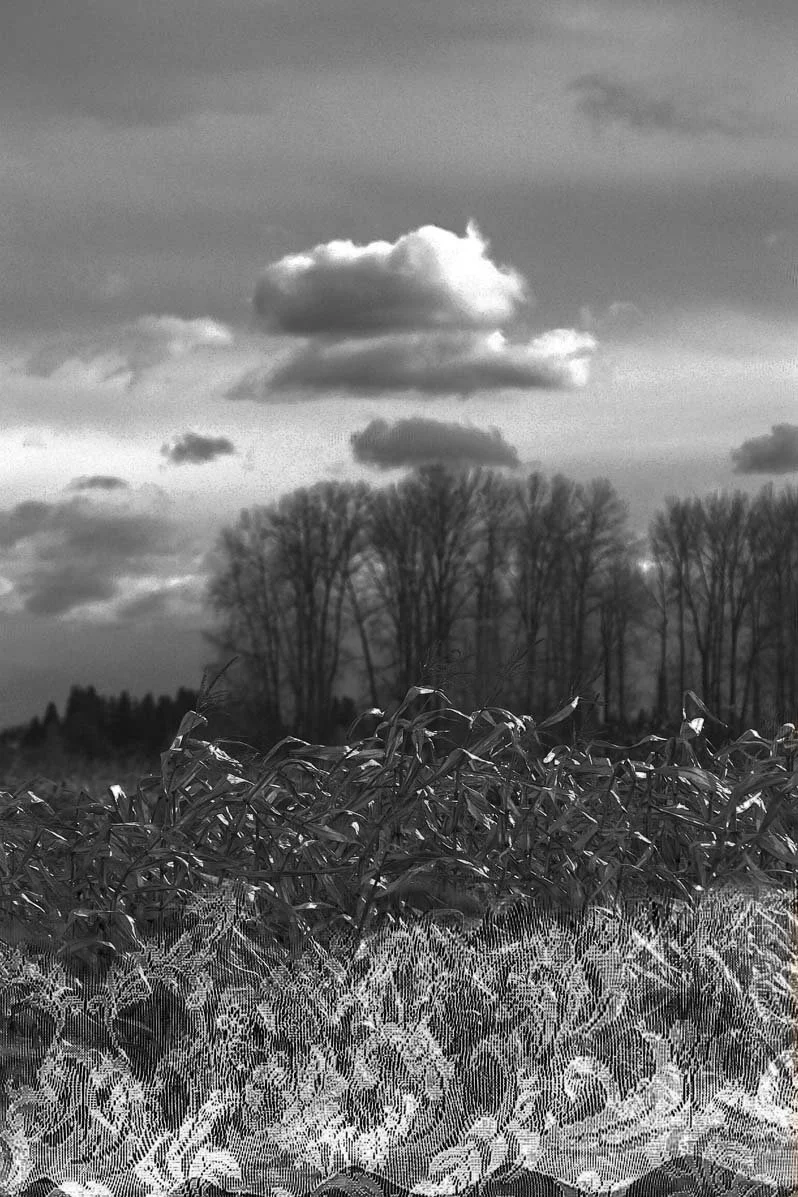
This 2025 series of photomontages grew out of ongoing concern about insufficient environmental protection. Fauna and flora in these landscapes - photographed in Europe, New Mexico and the Pacific Northwest -are endangered. Climate change and the renewed threat of industrial extraction of resources, forests and minerals alike, will do irreparable harm. I thought the ephemeral nature of clouds and the fragility of lace were fitting symbols for why we need step up in our efforts to turn things around.
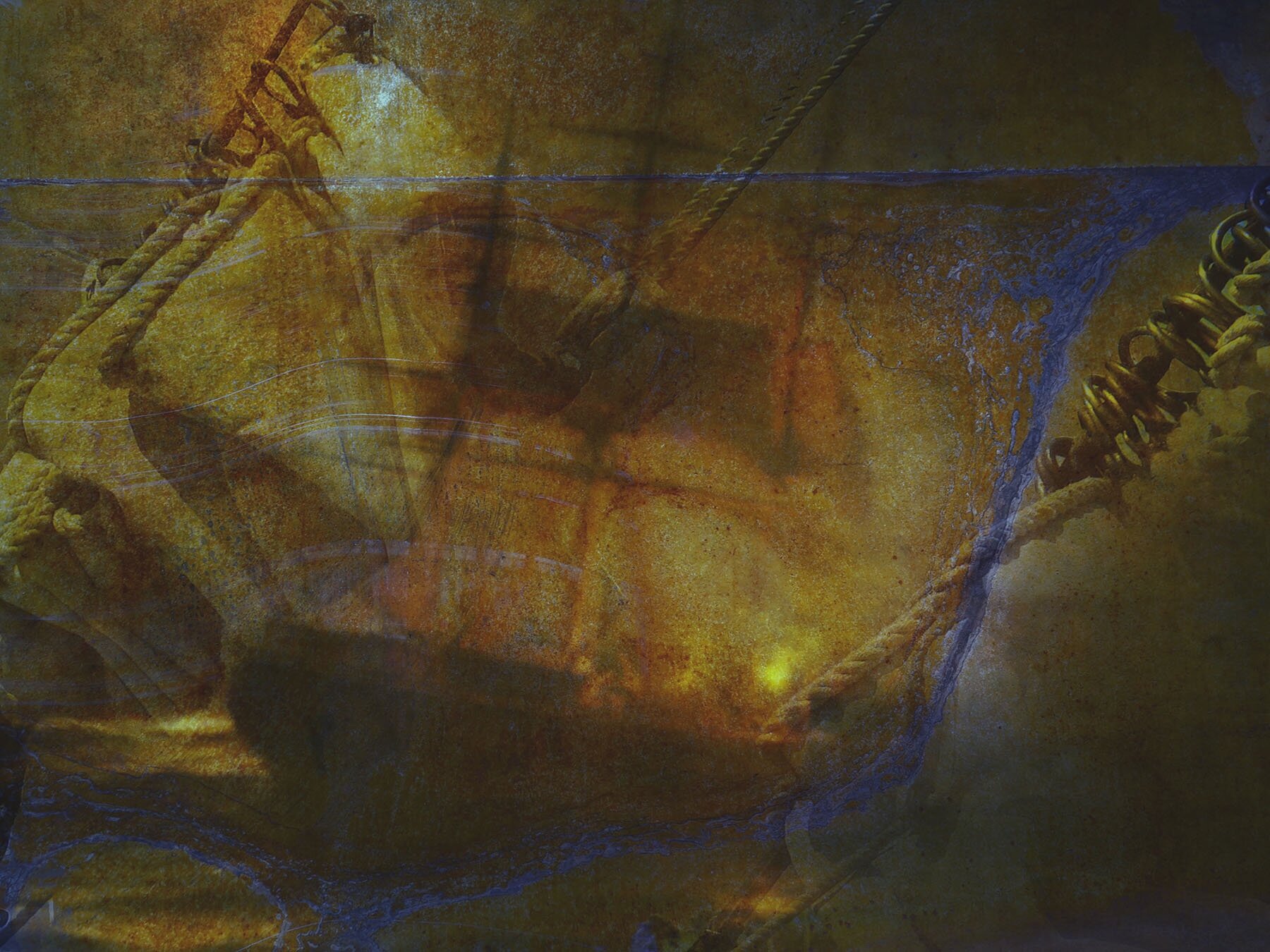
These photomontages use photographed snippets of 17th century Dutch paintings of whaling expeditions as a symbol for the dangers of exploiting our natural environment. Whales have been driven to the edge of extinction by ruthless pursuit in the search for profit (and with it large fishing industries and ways of life of First Nation populations.) We seem to have great difficulty learning a lesson about protecting natural resources and interconnected eco-systems. Combining almost 400 year-old observations with contemporary environments tries to serve as a reminder of the pressing need for stewardship.
The series consists of 20 plus photomontages (14x17) of landscapes and other environments photographed in the US and in Europe, printed with archival ink jet on German Etching paper.
Flying Dutchman
The first wave of Jewish immigrants who came to the US in order to escape poverty, oppression and persecution in Europe, started their new lives dealing with scrap metals and other kinds of refuse, until eventually turning garbage collection work into successful enterprises. Contemporary immigrants, legal or not, often have no other choice than turning to menial jobs, cleaning up our dirt, or working our fields.
Immigrants, then and now, certainly experience transience in both their physical displacement and in their psychological adjustment. The montages try to capture how disquieting or even menacing these states can be.
The materials that historically provided immigrants’ livelihood were also of a transient nature - cast off, discarded, broken and headed for the garbage. The same is true for the crops migrant laborers pick these days, the refuse they deal with in restaurant kitchens, or any other cleaning job. The photographs used for these montages were taken at steelyards, recycling stations, glass blowing studios’ refuse bins, fields and junk stores and then mixed with elements from local businesses (for example a shipyard in town) that were built as a result of the early immigrant labor.
The series (2014) consists of 18 photomontages printed 24x18 with archival ink-jet print on German Etching paper. Limited Edition of 10. First exhibited at the Oregon Jewish Museum and Center for Holocaust Education in 2015.
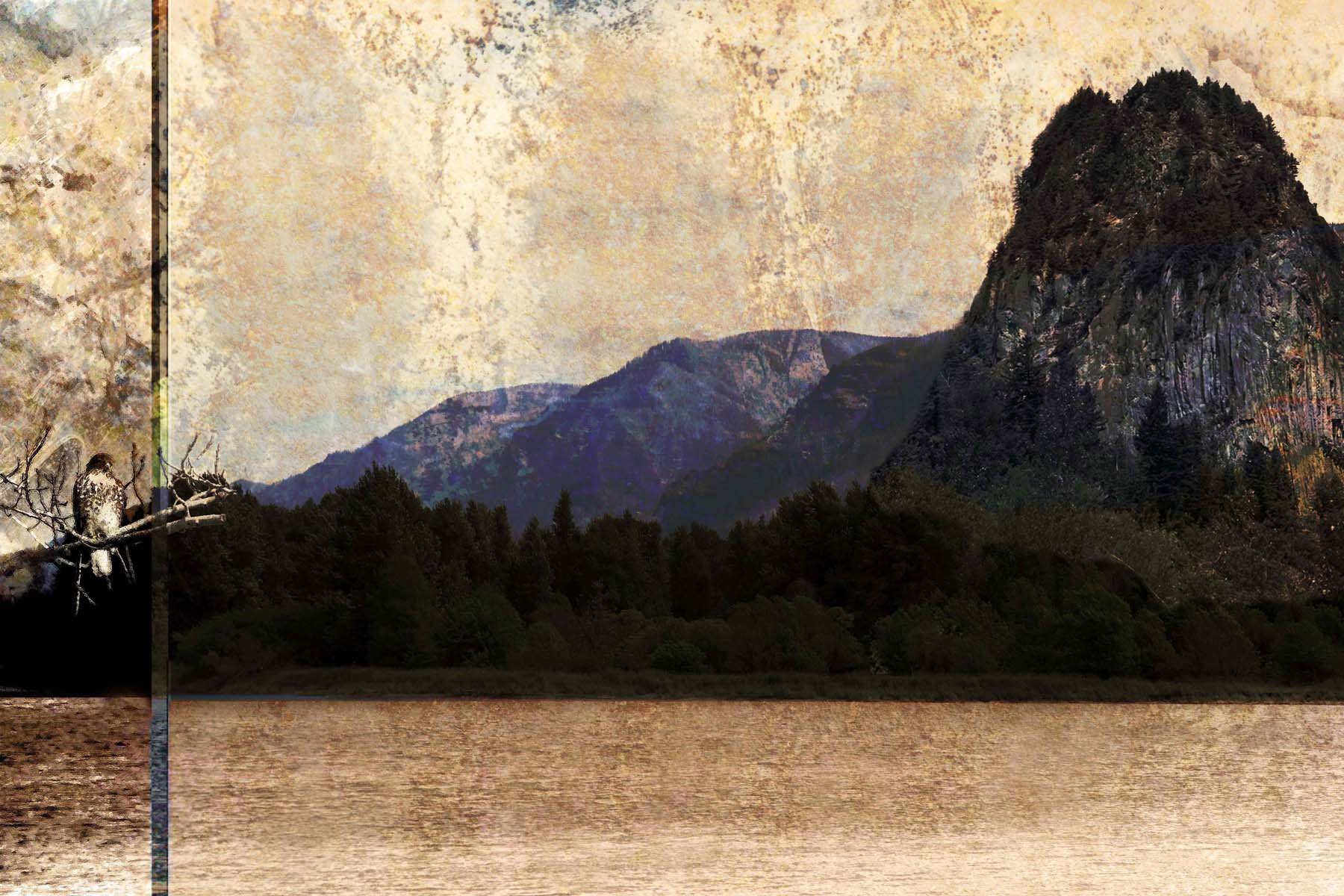
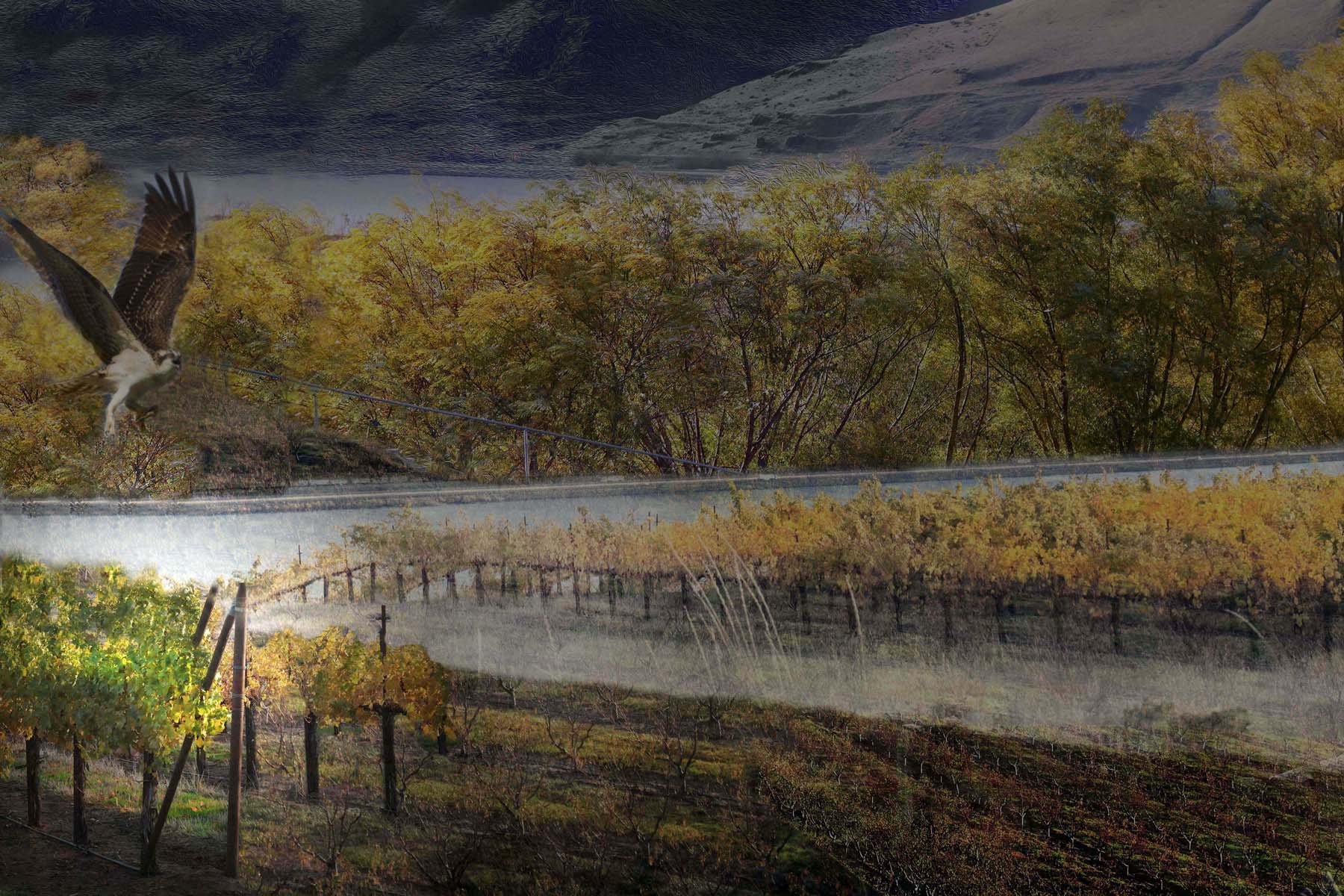
The Gorge Beckons: Change and Continuity
We are two photographer friends who have been drawn to the Columbia River Gorge for years, photographing and depicting the unparalleled beauty of this wonder, often during shared excursions. In contrast to many contemporary photographers who long to capture pristine and uninhabited landscapes, the views of yore, we both feel that the way the land looks now has an equally tangible and emotional beauty.
We acknowledge that the arrival of settlers and their descendants has brought trauma and destruction to the tribes that lived here since times immemorial and a permanent alteration of nature. Yet our work also wants to capture a bit of hopefulness that is immanent to the way nature and man nowadays interact: highways and railways, dams, recreation, fires, sources of renewable energy, re-cultivation of land, restoration efforts for the river and its salmon population, and preservation of forests and sacred sites.
One of us has photographed the river and the land with an eye on what has remained constant and a nod to historical photography in the Gorge, but also openness to the existence of human activity. The other manipulates photographs into montages that stress the possibility of change being accepted by nature, integrated and used for the benefit of all who populate this landscape.
Both of us are driven in this project by a motivation to use art as a tool to document what is, rather than was has been or could be, forever grateful that we are able to immerse ourselves in the grandeur of the Columbia Gorge.
These images are my contribution to the project. Ken Hochfeld’s work can be found here:
http://www.kenhochfeld.com/hochfeld_contact.html
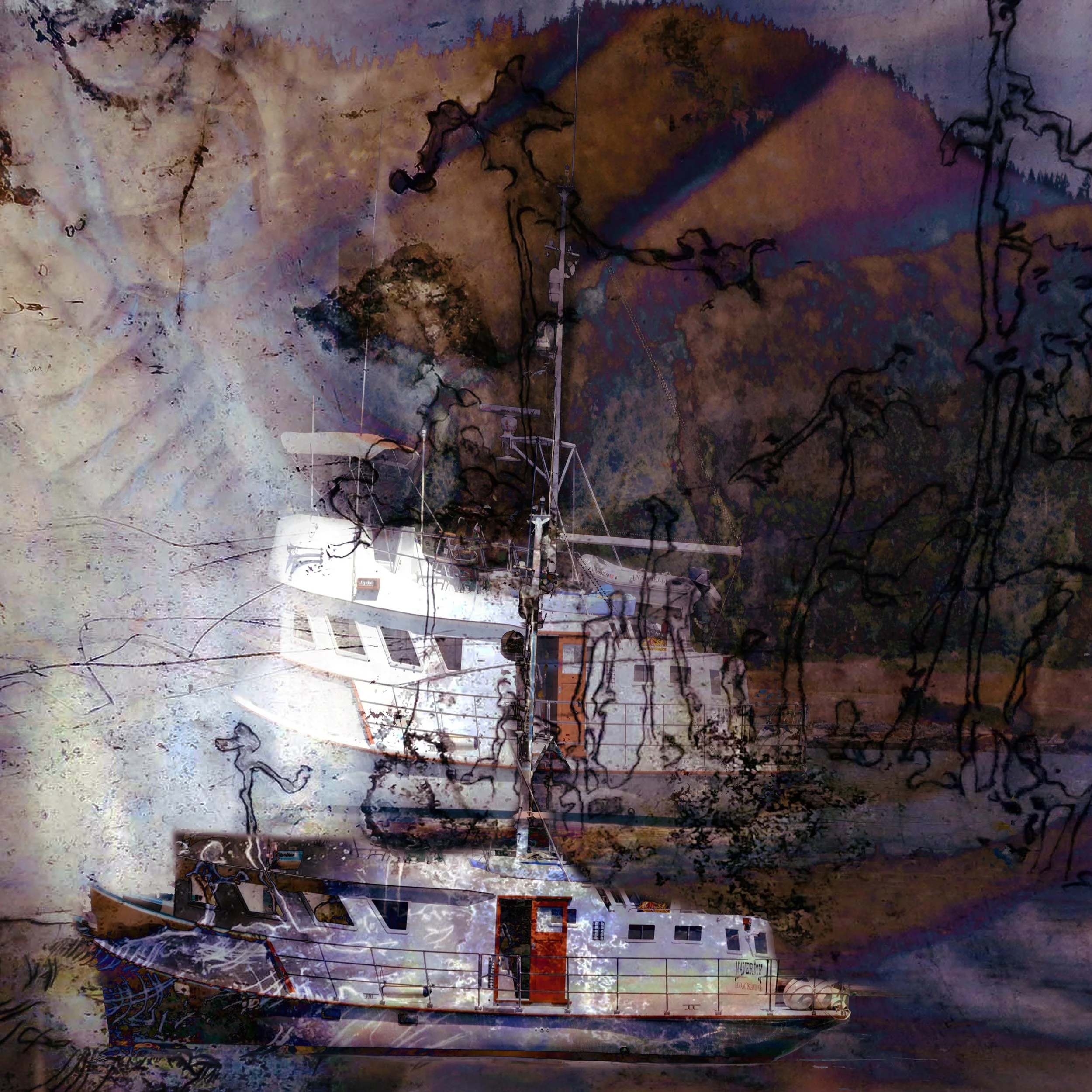
This 2022 series is a reminder of the women and men working at sea, during ever more dangerous and restrictive conditions, given ocean pollution, decimated fish stock and climate change. I have been photographing ships and boats all over the world, from small ferries, container giants, fishing boats to naval vessels. I tried to capture the beauty as well as the plight of working on the water in these images. It is the third installment of montages dedicated to the oceans, following Postcards from Nineveh (2019) and Setting Sail (2020). The images are 20x20 unmatted, printed on German Etching Paper.
Hamburg is an old, wealthy harbor city that has a history of its own losses. Around 50.000 people died and close to 60 percent of residential housing and 456 public buildings were destroyed during the fire bombing of the allied forces during WW II alone. The city is dominated by water, in proximity to the Baltic Sea, with the large river Elbe and canals traversing the city - in contrast to the mountainous and desert landscapes of the refugees’ country of origin. Hamburg was home to early revolutionaries like Heinrich Heine and Ernst Thälmann, the leader of the communist party during the Weimar Republic, murdered by Hitler, and also home to Max Brauer, the first mayor after WW II and Helmut Schmidt, the West German chancellor from 1974 to 1982, and the composers Brahms and Mendelsohn-Bartoldy.
By mid 2017, my former hometown of Hamburg, Germany, housed about 50.500 refugees, 12.000 of these under the age of 18. Most of them fled life threatening situations in Afghanistan, Syria and Iran. The administration’s and citizens’ engagement in support of refugees is exemplary, which is not necessarily the norm in either Germany or other European countries.
The photomontages, all based on photographs of Hamburg across the last decade, try to express how perplexing some of the sights might be to someone from the war zones of Afghanistan or Syria, how unsettling in their opulence and their ubiquitous wealth. But the images also pay homage to the beauty of a city that has survived wars, fascism, recurrent deadly fires and floods, and remained progressive, liberal and open-minded and embracing those fleeing war.
The series (2018) consists of 24 photomontages printed 20x16 with archival ink-jet print on German Etching paper. Limited Edition of 10.
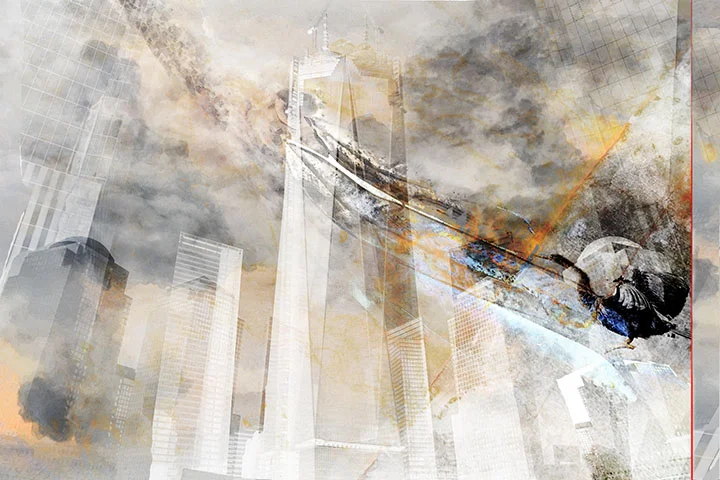
For us who have witnessed a lifetime of airplane disasters, the Icarus myth provides the easy analogy of things falling out of the sky. This series is more concerned, however, with the caveats the myth suggests: the assumption of being in control, of falling for the illusion of control. Humans invent and use technology, set national and global policies, and make economic or military decisions about situations prevailing powers consider controllable. Unlike Icarus, we often lack information or warning, but, like Daedalus, his father, we are often alert to the risks but convinced we can handle them – and are profoundly mistaken. The result sometimes involves the same fate as Icarus’s– falling from the sky – and sometimes takes other equally tragic forms.
The photomontages are intended to remind us of the evocative power of this myth, focusses on the illusion of control. The montages are linked to the story of Icarus through images of birds and linked to modern tragedy by depicting the locations where disasters happened - all photographs on site except for Ukraine and South China Sea, where I used visual stand-in’s.
The series (2015- ongoing) consists of photomontages printed 20x16 with archival ink-jet print on German Etching paper.
This photomontage series (2019) describes some of the common experiences of women across centuries. Just like our physiologies are tied to the phases of the moon so are we tied through shared life events and states connected to our lives.
A lot has changed for women; not enough has changed for women.
Giving birth, raising children, aging, being loved or abandoned, being controlled or forging our own path has always been basic to the female experience. Finding solace among sisters or competing for scraps as rivals was often part of our existence. Curiosity, skepticism, learning and rebelling had to be fought for. Longing, dreaming and hope were part of the way.
The series consists of some 30 photomontages (24x18) printed with archival ink jet on German Etching paper.
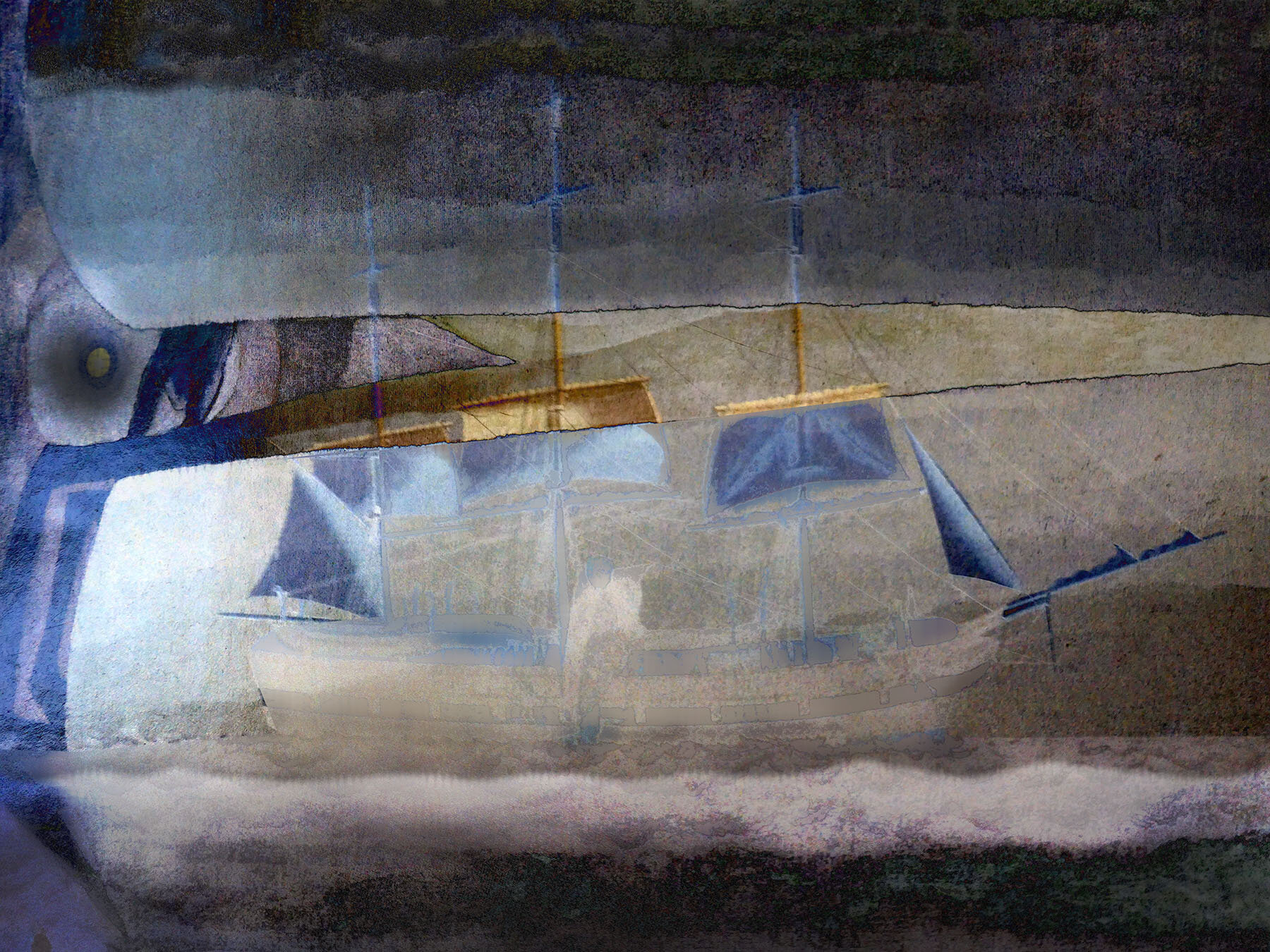
This series grew across the years of the pandemic. I like to think of those who left us as having set sail and moved on to more welcoming shores.
The sails, masts, beams, rudders and anchors for this 2022 series were photographed in harbors and maritime museums in the US and in Europe. The unpredictability of who got sick and who died across the last years reminded me of the unpredictability of sea journeys of yore with sailors not knowing if they would ever return.
The mythology of crossing the river Styx also lent itself to visual representations of maritime subjects. The vision that there might be a peaceful shore to which the departed are brought, surrounded by the geometric beauty found on sailboats, represented hope in this dark era. Walking on, setting sails, finding new horizons.
The Syrian refugee crisis had taken on unimaginable dimensions during 2017, both in the numbers of refugees arriving on European shores, the number of refugees not surviving the arduous journey, and the number of attacks experienced while applying for asylum.
All of this applies to some extent also to the contemporary US debate about immigration, with legal requirements to give shelter to those fleeing existential danger being ignored, and with nationalism and xenophobia on the rise.
It would be presumptuous of me to say I know what goes on in a refugee’s mind. I have not been bombed out, lived in fear for my life, driven out of my home, lost family to death and destruction, undertaken a perilous journey and arrived at a place that is alien in its climate, language and culture. I have not departed a home with no firm knowledge of where my next home would be – or if the people there would in any way welcome me.
My photomontages, then, are products of my imagination, trying to capture themes associated with displacement that I believe to be universal. In my imagination, longing for a new home, or a shelter, while re-living the trauma of the flight and the existential threats left behind, fills the refugees’ dreams.
Most of the series’ 20 some montages contain a building, representing longing for a home or at least shelter. Some contain people to focus on issues of isolation, unemployment, integration or cultural clash - they are mostly located in urban settings. And some contain a look back at the trauma of the voyage, and what’s left behind. The intense color choices reflect the vividness of nightmares.
The series (2017) consists of 24 photomontages printed 24x18 with archival ink-jet print on German Etching paper. Limited Edition of 10.
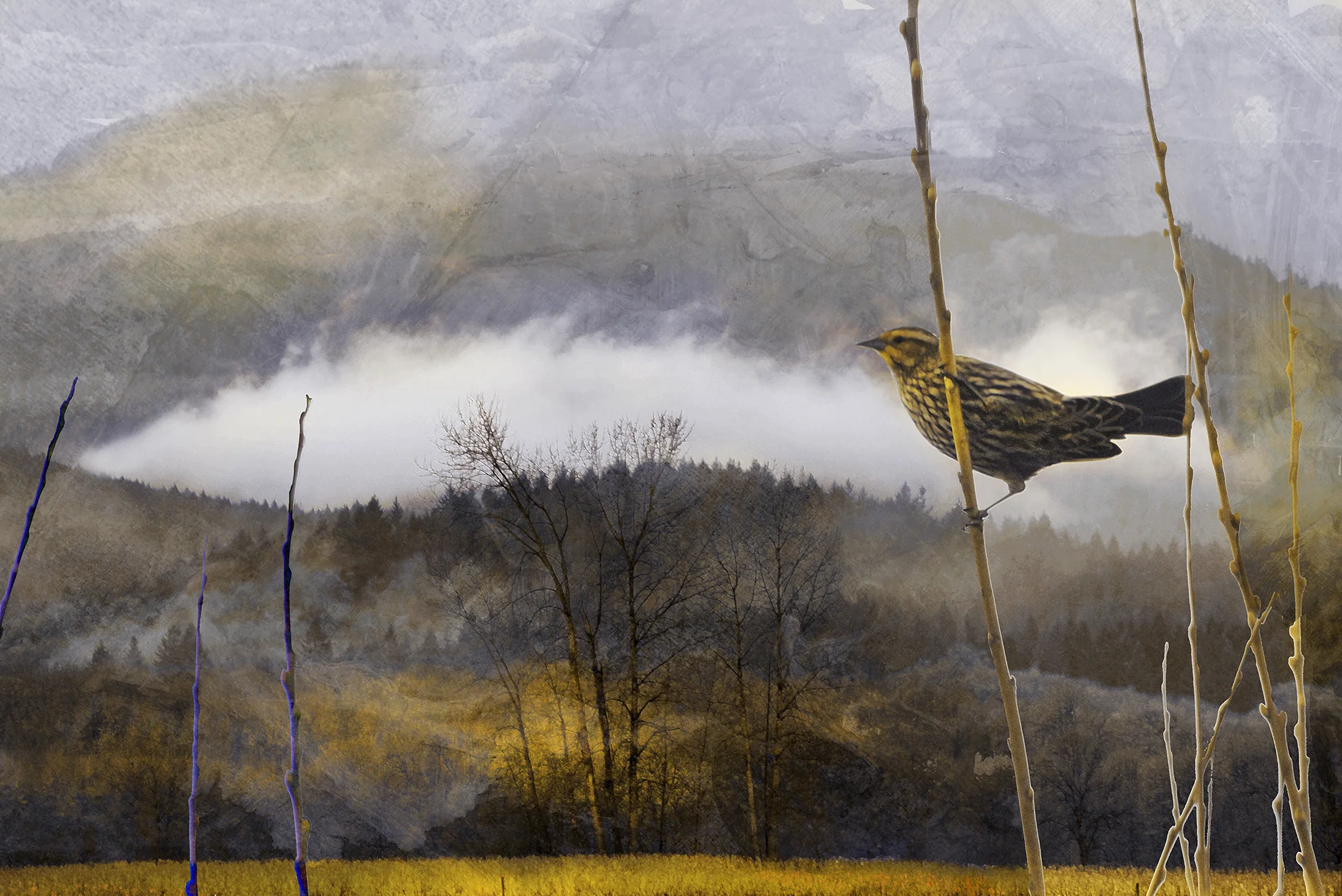
The series (2016) Denizens of Climate Change was intended to showcase the landscapes and bird populations of the Pacific Northwest - all of which will suffer the impact of climate change in the years to come, just like the rest of the world.
While photographing the beauty that surrounds us I was wondering how many of these species and natural sights will still be available to later generations. Will we have failed our children and their children by not pursuing a way to halt the destructive exploitation of our world more aggressively?
Have we done enough to stop the appointment of cabinet members here in the US that consider climate change a hoax, or worse, know it is real but will not forgo short term financial gain regardless of long term consequences? Are we willing to change our own behaviors to delay climate change, starting with how much we drive, how much we consume and what we eat?
The link below displays research by the Audubon Society and guides you through more than 300 bird species who will be climate threatened or climate endangered by the end of the century.
http://climate.audubon.org/all-species
The montages try to conserve the beauty of what is, and also hint at the destruction that will be upon us if we don't act. The disquieting nature of the montages is hopefully balanced by their appreciation for nature as we still experience it.
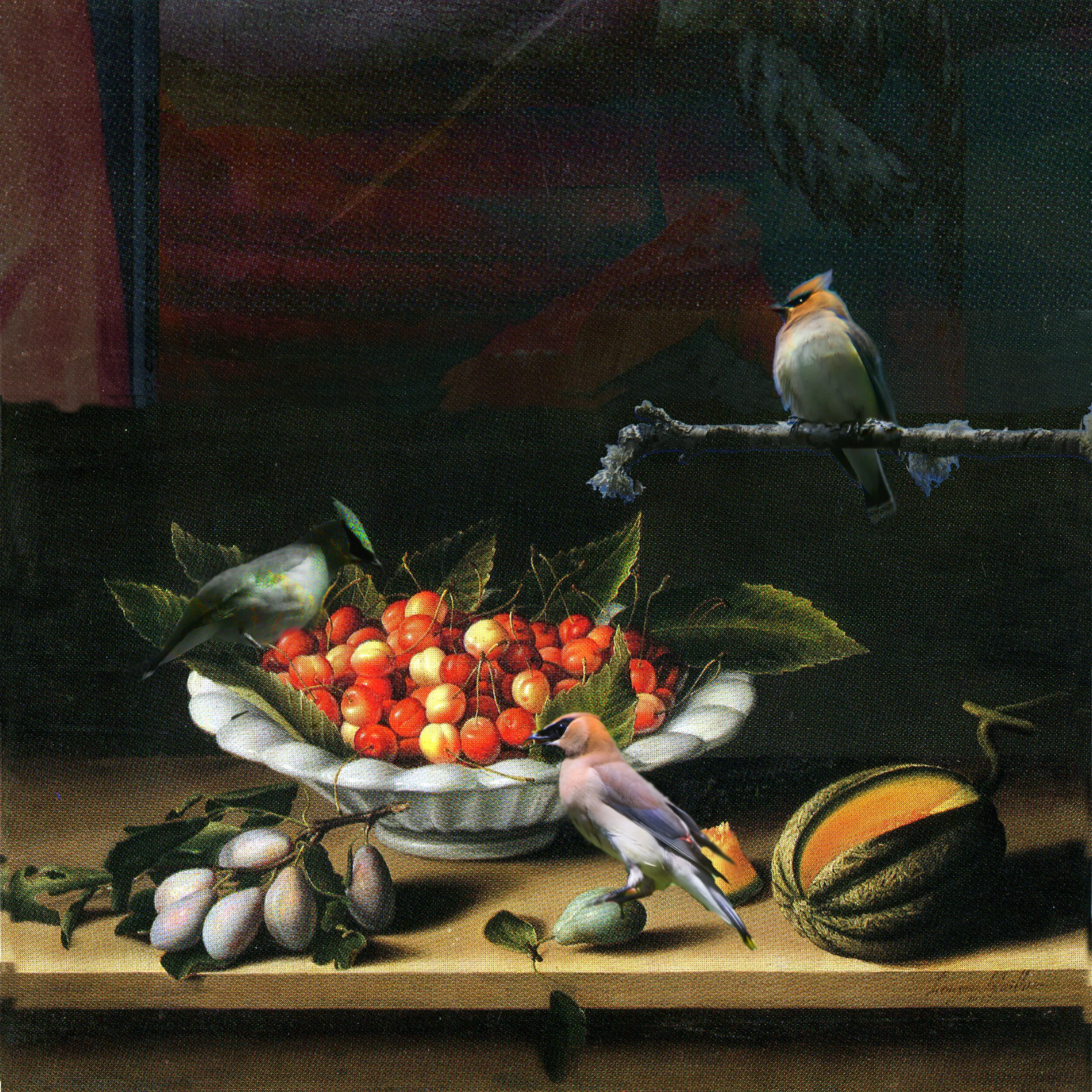
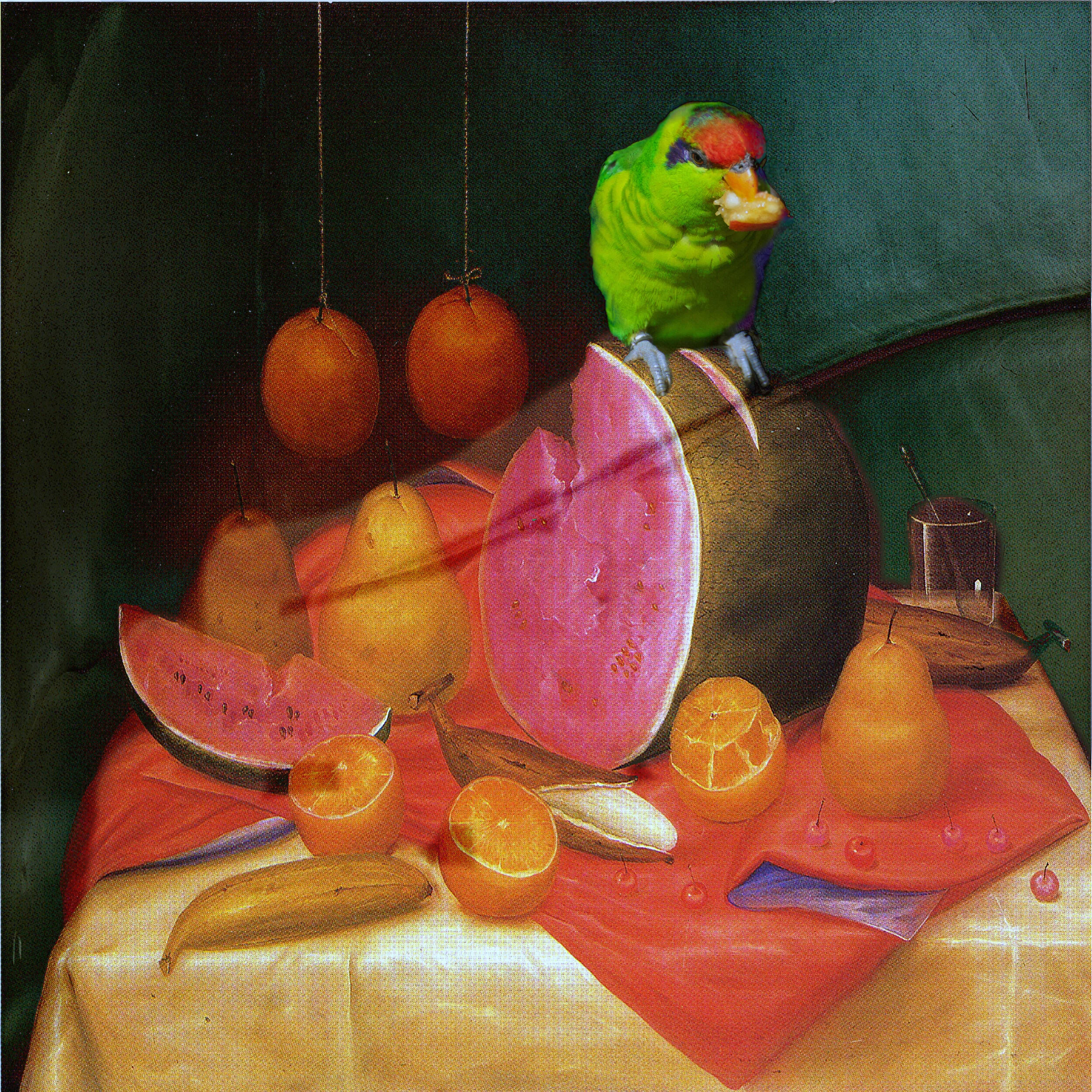
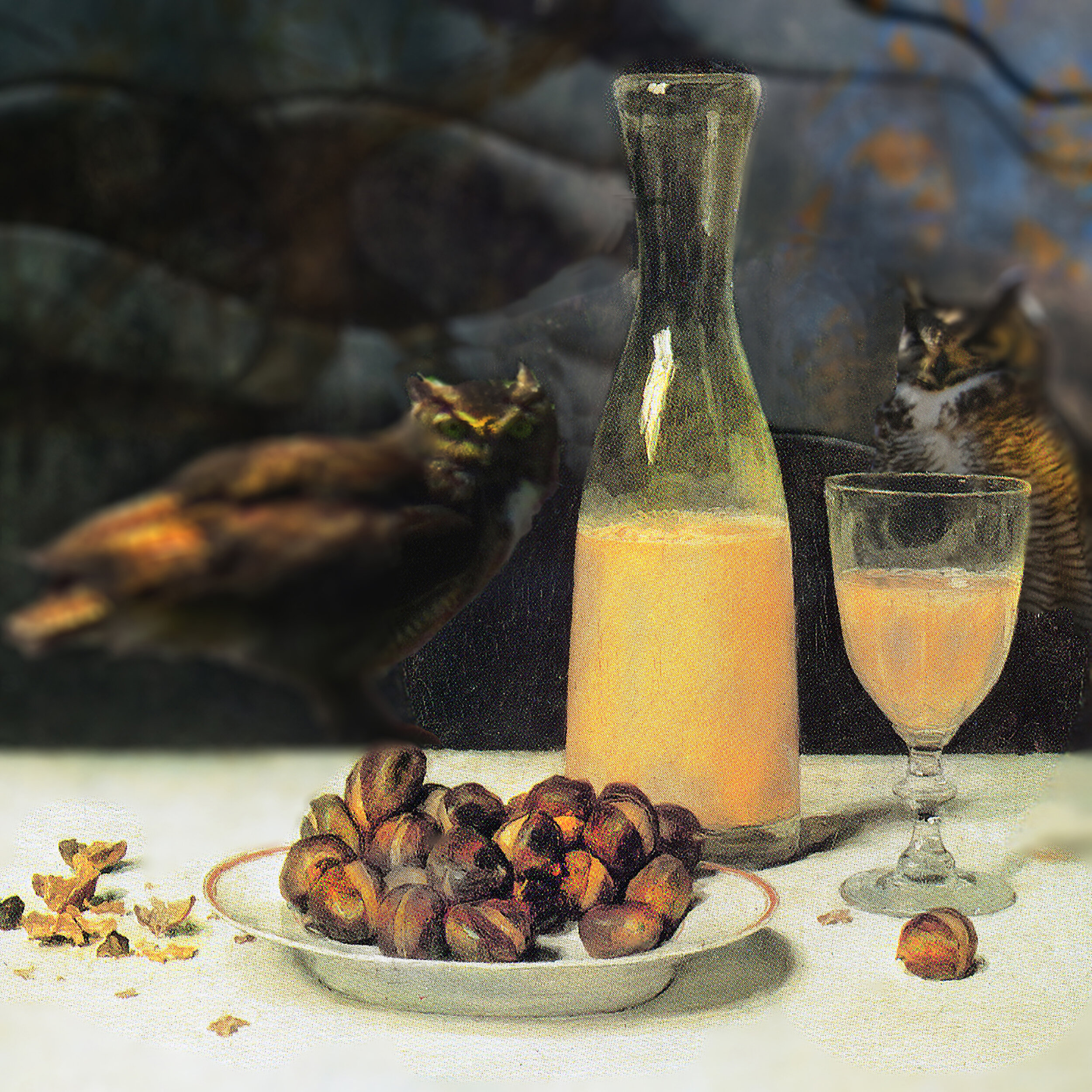
These montages, created during the pandemic in 2021, fuse altered excerpts of postcards collected in museums during life-long travel with my photographs of birds. The avian visitors were carefully selected to match some of the characteristics of the paintings.
Albert Anker - Neuer Wein und Kastanien - 1897 - with Owls.